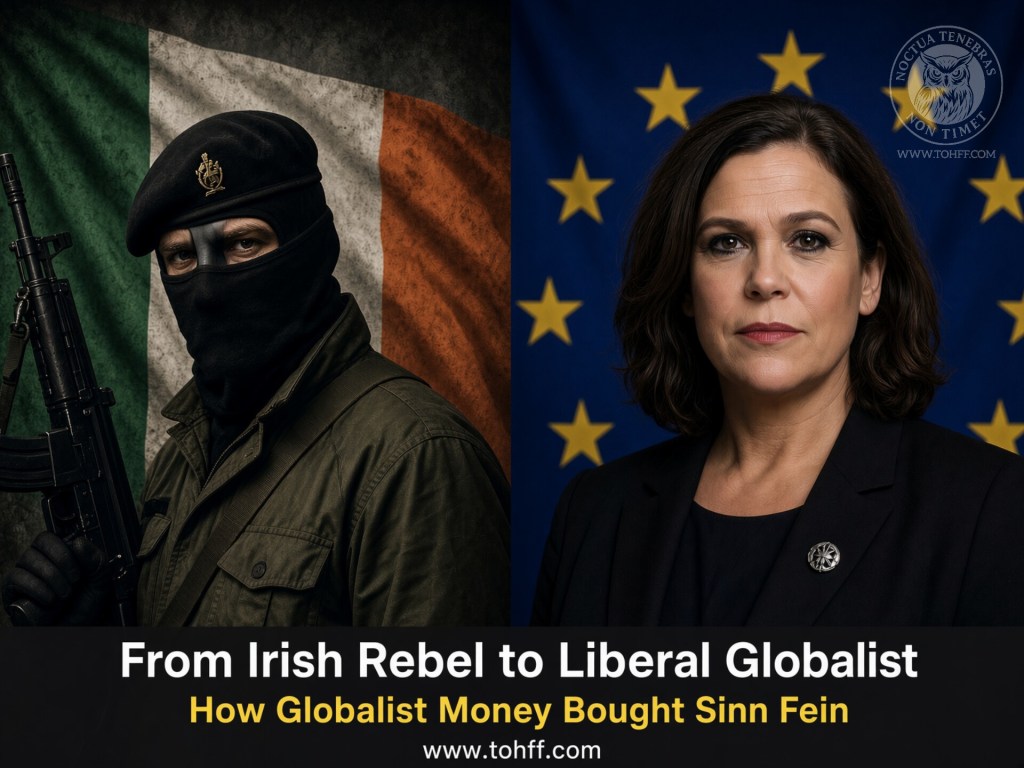
There was a time when Sinn Féin was the party of the working-class republican—the voice of those who fought British rule, who stood against the establishment, who represented the grit and grime of the Falls Road and the Bogside. Today, that party is barely recognisable. In its place stands a creature of the globalist establishment: bankrolled by the Irish state, wining and dining in New York, and abandoning its traditional base on the issues that matter most.
The transformation is stark. And it is being paid for.
From the Armed Struggle to the Dole Queue
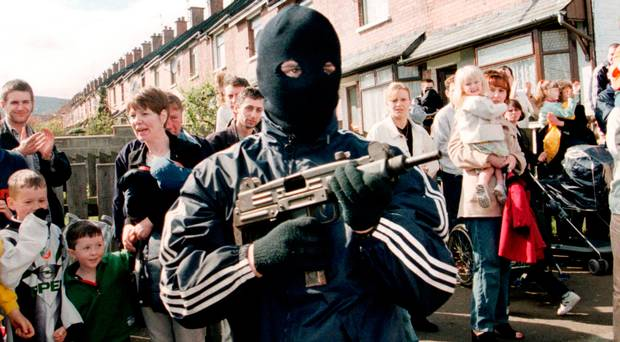
During the Troubles, Sinn Féin was funded by the IRA through what Tony Blair himself described to George W. Bush as “the proceeds of crime”. Bank robberies, protection rackets, fuel smuggling—these were the engines that kept the republican movement running. The 2004 Northern Bank raid alone added £26.5 million to Sinn Féin-IRA coffers—more than six and a half years after the Good Friday Agreement was signed.
Back then, the EU gave them nothing. The UK gave them nothing. Even the Republic of Ireland, while sympathetic in parts, wasn’t writing cheques. The movement survived on criminality, American donations from NORAID, and the sheer ideological commitment of its grassroots.
The IRA’s financial empire during the Troubles was vast and sophisticated. In the 1970s, the organisation skimmed profits from businesses like clubs, bars, and taxi companies across the border. By the 1980s, it had evolved into large-scale smuggling operations—cigarettes, fuel, livestock—along with video piracy and extensive protection rackets. By the late Troubles, protection rackets alone were estimated to generate over £6 million annually.
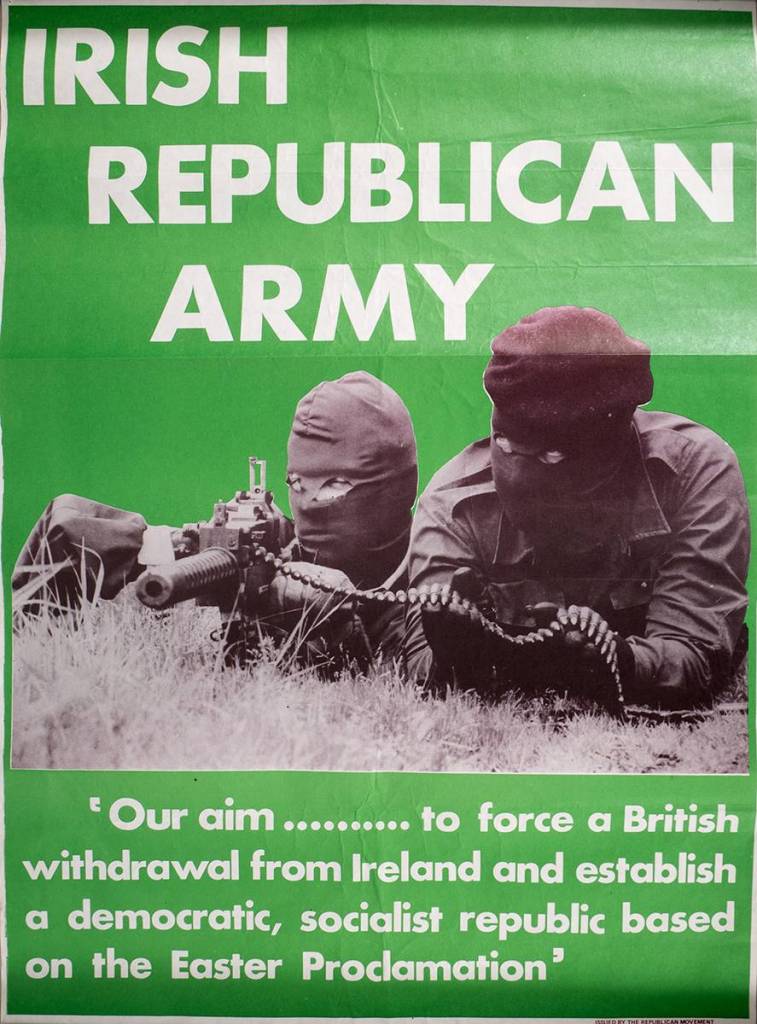
There were also international connections. The Libyan regime of Muammar Gaddafi was the IRA’s main state sponsor, providing not just weapons (including the infamous Semtex) but also funding and training. Intelligence suggested this included over £6 million for arms. Direct cash payments were also reported. In the United States, NORAID donations were estimated at around £300,000 annually in the 1970s, while later networks like “Friends of Sinn Féin” became a major channel for donations.
Today, the funding picture could not be more different. Sinn Féin has gone from a party funded by criminal enterprise to one sustained by the very state establishments it once sought to overthrow.
Government Funding: Then and Now
To understand just how profound the transformation has been, you need to look at where the money came from then—and where it comes from now.
During the Troubles, the funding breakdown was stark.
The overwhelming bulk of republican revenue—estimated at up to eighty per cent of all Provisional IRA funding—came from criminal and legitimate activities generated within Ireland itself. This included bank robberies, protection rackets, fuel smuggling, and business fronts like taxi firms, pubs, and clubs. The IRA was, in essence, a self-funding paramilitary operation.
Overseas donations played a significant but secondary role. Irish-American funding via NORAID provided a crucial lifeline. Between 1970 and 1991, NORAID donations were estimated at around $3.6 million—a substantial sum at the time, but still a fraction of what the IRA generated domestically.
Libyan state sponsorship provided both weapons and cash, with estimates suggesting over £6 million for arms alone.
As for official state funding from the UK, the EU, or even the Republic of Ireland? It was virtually non-existent. The UK government actively sought to starve the IRA of resources. The EU—which Sinn Féin opposed at the time—provided nothing. And while some in the Republic were sympathetic, the Irish state was not writing cheques to a paramilitary organisation.
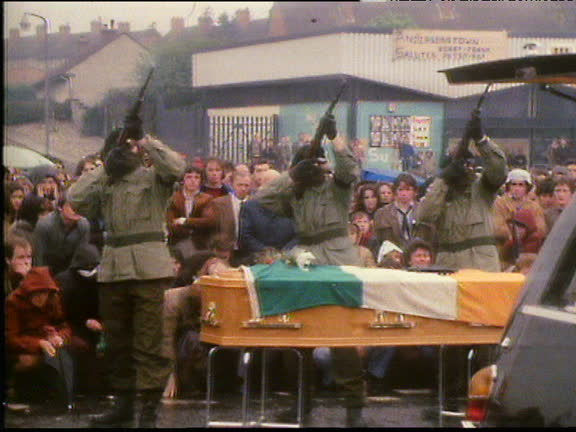
Fast forward to today, and the numbers tell an entirely different story.
In 2024, Sinn Féin declared a total all-island income of €7.9 million. Of that, funding from the Republic of Ireland’s exchequer alone accounts for approximately €3.85 million annually—nearly forty-nine per cent of the party’s total income. This makes Sinn Féin the most heavily state-funded political party in the Republic of Ireland.
When you add in UK state funding, the total government contribution rises further. Sinn Féin receives approximately £359,833 (€414,966) annually from UK sources, including Stormont grants and Westminster allowances. This includes £364,052 in grants from the Northern Ireland Assembly in 2024, plus £196,548 in Short Money and Representative Money from Westminster in 2024-2025.
The EU, which Sinn Féin once opposed, now provides access to programmes like PEACE PLUS, though direct core EU funding to the party’s central finances is not separately reported. The party that once railed against the European establishment now quietly benefits from it.
A commonly cited figure for Sinn Féin’s total state funding is that approximately ninety-three per cent comes from the Republic of Ireland and only seven per cent from the United Kingdom. This represents a complete reversal of the funding landscape during the Troubles, when the IRA generated the overwhelming majority of its revenue from domestic criminal enterprises, not state handouts.
The remaining income—roughly thirty per cent of the party’s total—comes from private donations, commercial ventures like the Sinn Féin Bookshop and An Phoblacht, and fundraising from the United States. The party is now one of the wealthiest in Ireland, with reported reserves of €8.7 million.
The irony is profound. A party that once survived on bank robberies and smuggling is now funded by the very state establishments it once sought to overthrow. The rebels have become the establishment—and the establishment is paying for it.
In the Pay of the Governments They Once Fought Against
Perhaps the most galling irony of all is that Sinn Féin’s elected representatives—the MPs, the MLAs, the councillors—are now directly in the pay of the very governments their predecessors once fought against with bullets and bombs.
Consider the Members of Parliament. Sinn Féin MPs do not take their Westminster salaries as a matter of principle, but that does not mean they are unpaid. The party pays its MPs directly from party funds—funds that are themselves heavily subsidised by the state. In 2021, Sinn Féin’s wage bill in Northern Ireland was £799,334, with an average salary exceeding £53,000 per full-time role. Critics have pointed out that none of Sinn Féin’s seven MPs declare their party salary in the official Westminster Register of Interests, leading to calls for an investigation into the lack of transparency.
On top of this, MPs can claim substantial taxpayer-funded expenses for constituency work, travel, and office costs. They can also accept donations. For example, MP Pat Cullen received a £3,369 trip from the US-based ‘Friends of Sinn Féin’, while other representatives have outside earnings—John Finucane MP still maintains income from his law firm.
Then there are the Members of the Legislative Assembly at Stormont. These representatives do take their full public salaries, which are set to rise to £67,200 from April 2026. They also claim expenses. These are British government salaries, paid for by the British taxpayer—the very government the Provisional IRA spent decades trying to destroy.
Sinn Féin councillors across Northern Ireland also draw their allowances and expenses from the British local government system they once refused to recognise. Every cheque they cash, every expense claim they submit, comes from the coffers of the state they were formed to overthrow.
The party has long claimed that its representatives take only an “average industrial wage” (around £26,000), donating the rest back to the party. But this system has come under fire for its lack of transparency. The party admits the “recommended party wage” system is now “entirely voluntary”, leaving the public in the dark about their actual earnings.
So here we are. Men and women who sit in the British Parliament, draw salaries from the British state, claim expenses from the British taxpayer—all while maintaining that they oppose British rule in Northern Ireland. They are, in every practical sense, in the pay of the governments they once fought against with guns.
The rebels of the 1970s and 1980s did not die in hunger strikes, nor rot in British prisons, so that their successors could draw a comfortable salary from the British Exchequer. But that is exactly what has happened.
The American Connection
Then there is the United States. The “Friends of Sinn Féin” in New York has become a financial pipeline of staggering proportions. In the six months to April 2026 alone, they sent over $47,000 (€41,000)** back to the party in Belfast. They raised **$114,266 in that same period, spending $91,232 on hotels, restaurants, Uber rides, and airline tickets.
One of the largest donors listed was Jantile Specialities LLC in Armonk, New York, giving $10,000. Others include construction companies, labour coalitions, and wealthy American benefactors. The late Chuck Feeney was reportedly the largest US funder of Sinn Féin from 1995 to 2014, donating £512,000.
In 2021, the group raised $189,000**, of which **$43,000 was transferred to the party in Belfast and $48,000** to the party in Dublin. The group’s accounts show major donations including **$18,000 from Global Haulage and $25,000** from the Pat Hackett Foundation. In 2019, the party received over **$500,000 from American donors.
The party insists that “Friends of Sinn Féin” is not a subsidiary for accounting purposes—a convenient distinction that allows them to keep these American millions off their consolidated accounts. It is a remarkable feat of financial gymnastics for a party that claims to represent the people of Ireland.
This is not the funding of rebels. This is the funding of globalists.
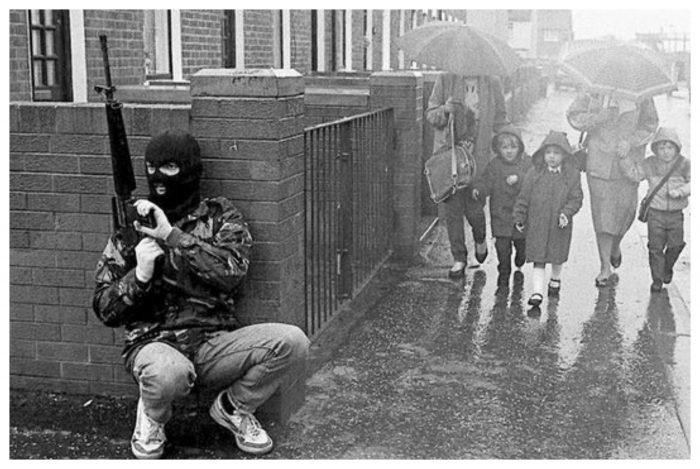
Immigration: The Breaking Point
For many of Sinn Féin’s traditional supporters, the final straw has been immigration. Surveys have found that many grassroots members take a hostile view of immigrants, particularly from Africa and predominantly Muslim nations. Yet the party leadership has embraced what critics call a “liberal, pro-immigrant stance” that is fundamentally at odds with its working-class base.
The disconnect is devastating. As one analysis put it, Sinn Féin “more than any other party risks losing touch with its working-class supporters who are the ones most likely to see the economically deprived areas where they live targeted to settle migrants”.
When the Dublin riots erupted after a stabbing by an Algerian migrant, Sinn Féin’s initial response was to side with the Garda commissioner’s depiction of protesters as a “complete lunatic, hooligan faction driven by far-Right ideology”. It “did not go unnoticed by working-class” voters.
Mary Lou McDonald herself admitted that senior figures in Sinn Féin were “disappointed” with her engagement with the party’s base and that she needed to offer more “clarity” on immigration policy. She acknowledged that “a section of our base, they felt that we had pulled our punches”.
They had not just pulled their punches. They had switched sides.
A 2022 poll of Sinn Féin supporters found that sixty-one per cent believed Ireland had taken in too many refugees. This represented the highest level of scepticism among any party’s supporters. Yet the leadership pressed ahead with a liberal immigration agenda that directly contradicted the views of its own base.
In the Republic of Ireland, where immigration has become a defining issue, Sinn Féin’s equivocal response has been catastrophic. The party’s base felt ignored. Its leadership seemed more concerned with maintaining a progressive image than with representing the people who built the movement.
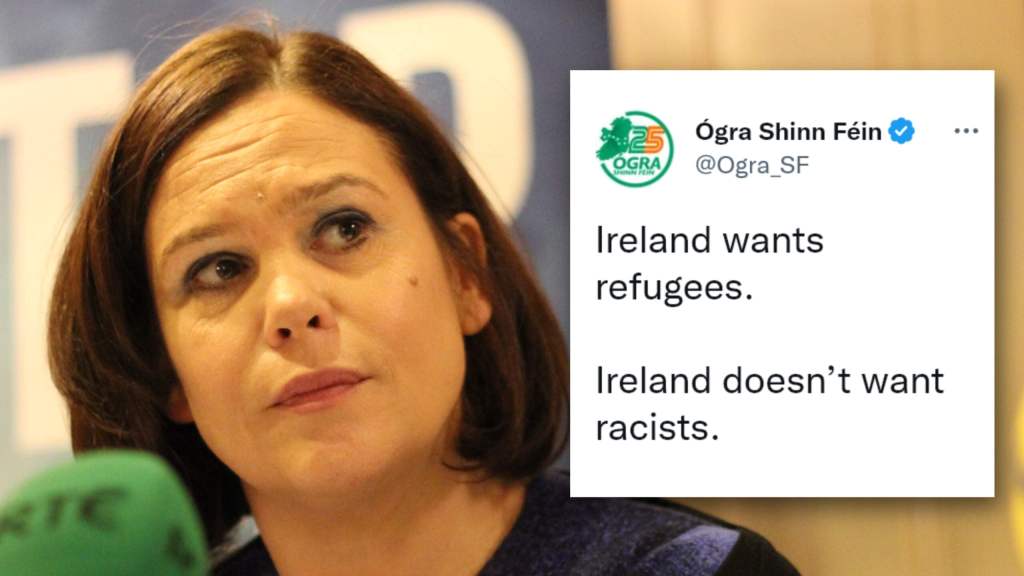
The Betrayal of the Grassroots
The result has been a fracturing of the party’s electoral coalition. Traditional working-class voters have deserted the party because of its “soft” line on immigration. Meanwhile, younger progressive voters were alienated by its attempts to reassure middle Ireland that its promises of radical change were not actually that radical.
Sinn Féin’s poll numbers have collapsed—from thirty-seven per cent in June 2022 to around twenty-five per cent. In local elections, they slumped to around eleven per cent.
Dr. Matt Treacy, a former Provisional IRA member imprisoned during the Troubles, has been one of the most vocal critics. He and others have pointed out that Sinn Féin’s divergence from public opinion on immigration is nothing new—they were embarrassed by losing the 2004 referendum to give foreign-born children Irish citizenship—but the current leadership has taken it to a new extreme.
The party that once fought for Irish independence is now actively facilitating the demographic transformation of the country it claims to love.
Former Sinn Féin supporters are expressing their disgust openly. On social media, in working-class pubs, and on doorsteps across Belfast and Dublin, the sentiment is the same: “They’ve sold us out.” The party’s traditional base—the housing estates, the ex-prisoners, the republican families who sacrificed everything—feel abandoned.
One former Sinn Féin councillor, speaking anonymously, put it bluntly: “The leadership is more interested in what’s said in the Dáil and on CNN than what’s said on the Falls Road. We built this party on the backs of working-class republicans, and now they’re treating us like we’re the enemy.”
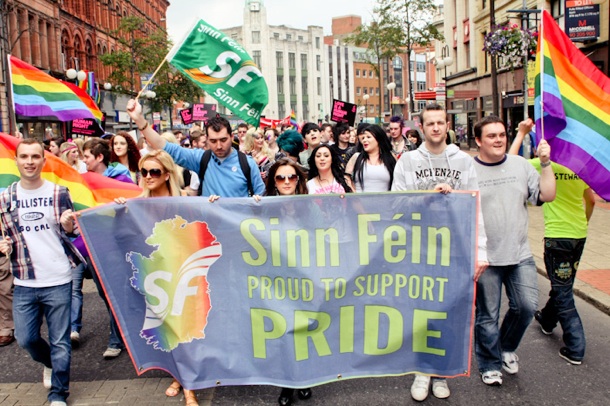
A Party Without a Soul
What we are witnessing is a fundamental transformation. The rebels who once stood against the British state have become supplicants to the Irish state. The anti-establishment firebrands have become globalist enthusiasts. The champions of the working class have abandoned their base on the most pressing issue of the day.
Sinn Féin is no longer the party of the Provisional IRA. It is the party of the Irish Exchequer, the New York fundraising circuit, and the liberal progressive consensus. It has traded its soul for state funding, American dollars, and the approval of the globalist establishment.
The grassroots know it. The former IRA men know it. And increasingly, the Irish people are coming to know it too.
The party’s own chairman, Declan Kearney, recently declared that “we will not allow our party to be exposed to any far-right elements” after expelling a member linked to an anti-immigrant terror plot. But in purging the “far-right,” they have purged the very working-class communities that built the movement.
There is a growing murmur of discontent among the grassroots. The party’s base perceives it as “either unwilling or incapable of effectively countering” unionist opposition. This is reflected in a reported poll drop from around thirty per cent to below twenty-five per cent.
The Globalist Transformation
The globalist takeover of Sinn Féin is not accidental. It is the product of decades of strategic positioning designed to make the party acceptable to the international establishment.
In the 1990s, the party began its journey from pariah to partner. The Good Friday Agreement brought them into the mainstream. The disarmament of the IRA opened doors to American investment. The party’s leadership—from Gerry Adams to Mary Lou McDonald—have carefully cultivated an image of respectability.
But respectability has come at a cost. The party that once stood against global capitalism now embraces it. The party that once railed against the European Union now accesses its funds. The party that once fought for the Irish working class now represents a progressive agenda that is deeply unpopular among that same working class.
This is not evolution. This is surrender.
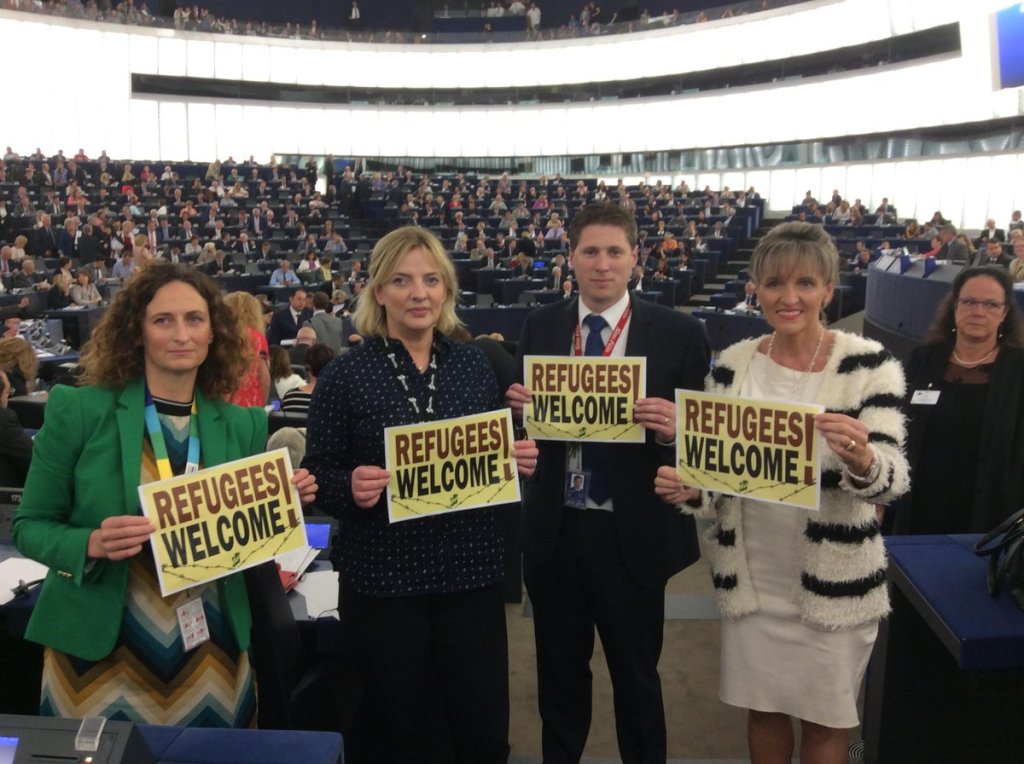
The Final Irony
Perhaps the greatest irony of all is that Sinn Féin’s transformation has failed to deliver its ultimate goal: a united Ireland. The party has abandoned its base on immigration, alienated its traditional supporters, and embraced a globalist agenda that is fundamentally at odds with Irish national identity.
A united Ireland, if it ever comes, will not be built by a party that has sold its soul for state funding and American donations. It will be built by those who still believe in the republican ideals of Irish independence and working-class solidarity.
Sinn Féin’s leadership may have secured their positions and their pensions, but they have lost something far more valuable: the trust and respect of the people they were elected to represent.
Brits out, everyone else in—that is the new Sinn Féin slogan, whether they admit it or not. And the people who fought and died for Irish freedom are watching in disbelief as their life’s work is handed over to a globalist agenda funded by the very establishment they once opposed.
Call It What It Is
The transformation of Sinn Féin is one of the great political betrayals of our time. A party born in rebellion has become a creature of the state. A movement built on working-class solidarity has abandoned its base. An organisation that once stood against global capitalism now runs on its money!
The grassroots are disgusted. The former IRA members have walked away. The people who built the movement are watching it crumble.
And the globalists? They are just getting started.
Books on Amazon
The Honest ObserverCorporate
Intelligence Tactics For Detecting Lies, Scams & Surviving Sabotage
No theory. No fluff. Just the tactics you need to see through deception, defend against manipulation, and survive sabotage. This book will change how you see everyone around you.
Kindle @ https://www.amazon.com/dp/B0H3LB7W9M
Audio @ https://www.amazon.com/dp/B0H3LKT1TW
Paperback @ https://www.amazon.com/dp/B0H3NH7BVT
Hardcover @ https://www.amazon.com/dp/B0H3NKHGC1

