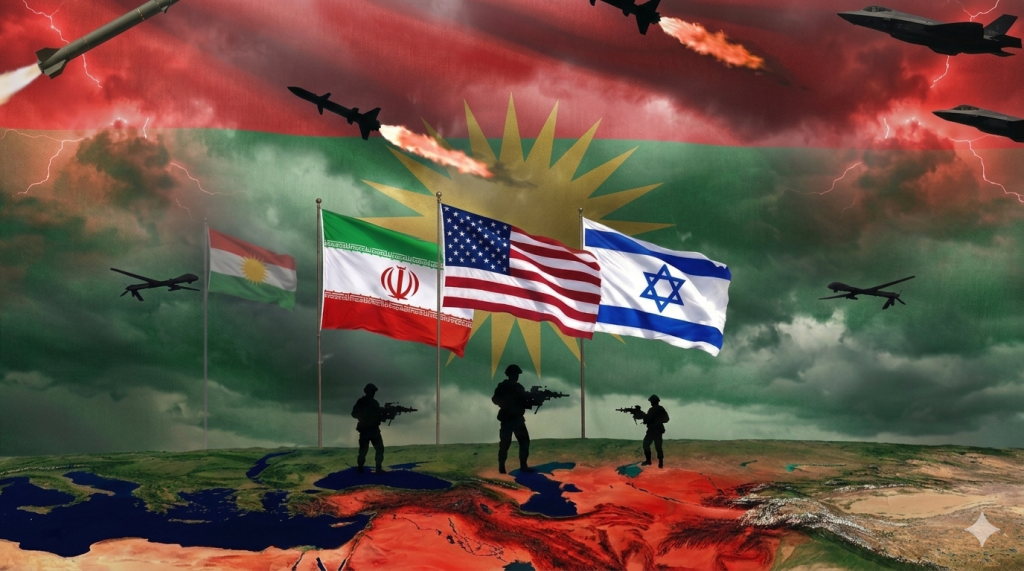
Regime change in Iran is inevitable, but the big question is who will take over from the “Mullahs” who have held absolute power in the Islamic Republic since the 1979 revolution. The opposition groups are deeply fragmented and lack a unified leadership or a coherent strategy. Could any of these opposition groups realistically govern Iran, manage its natural resources and unite its ethnically diverse population? The danger of Iran falling into a state of civil war and complete dysfunction is very real and is something that is a serious threat for the whole region.
This fragmentation was starkly evident during the 2025–2026 protests, sparked by economic collapse, hyperinflation, and austerity measures, which evolved into calls for regime change but were brutally suppressed, resulting in thousands of deaths. The protests, beginning in December 2025, highlighted widespread discontent within the country but also underscored the opposition’s inability to capitalize on momentum. A point to emphasize this is that there were no defections from Iranian security forces and clearly limited coordination among protesting groups.
It was clearly demonstrated that the Mullahs, the Islamic Revolutionary Guard Corps (IRGC), and their proxies will ruthlessly oppress any protests and opposition to their regime. Official death tolls run around seven thousand people killed, with over eleven thousand still missing. Unofficial reports put the death toll around thirty-five thousand.
The Islamic Revolutionary Guard Corps is the backbone of the current Islamic regime in Iran. Aside from their military activities, the IRGC have a strong influence over much of the countries’ commercial activities, for example the sugar industry is one sector which they regulate. During the recent protests there were many reports of Arab foreigners within the ranks of the security forces, no doubt members of the Iraqi Hashd Al-Shaabi militias, and displaced members of the former Syrian Al Assad’s regimes security forces. We also can not forget the ethnic Afghan Fatemiyoun Brigade which was formed to fight in Syria under the guidance of the IRGC.
The Iranian armed forces and IRGC has a large arsenal of small arms and sophisticated weaponry. Their naval forces have the capabilities to cause chaos, if not close the oil and gas exports from the Persian Gulf completely for an extended period of time. If a civil war or armed internal power struggle develops, it will be very messy for Iran and its neighbors. If the IRGC’s proxies such as the various Hezbollah factions rally to their cause, then acts of international terrorism will surge.
One question that many opposition groups are reluctant to answer is if they take power will they cooperate with the IRGC for internal security, military and commercial activities? Also, will the IRGC be held accountable for the human rights abuses and terrorist activity that it is responsible for? Can a new government in Iran properly govern without the established infrastructure which is controlled by the IRGC? So, will the Iranian Government actually be a new government or just the same IRGC players, dressed in different suits with a new puppet at their forefront?
Who Are The Main Opposition Players
Historically, Iran’s opposition traces its roots to the 1979 Islamic Revolution, which initially included a broad coalition of leftists, nationalists, Islamists, and monarchists united against Shah Mohammad Reza Pahlavi. Post-revolution, many of these factions were sidelined or persecuted by the new Islamic clerical leadership under Ayatollah Ruhollah Khomeini.
The 1980s saw brutal crackdowns on all opposition groups by the Islamic regime, including the execution of thousands during the 1988 massacres, targeting groups like the People’s Mojahedin Organization of Iran (MEK). The 1990s and 2000s witnessed the rise of reformist movements, such as the Green Movement in 2009, which demanded electoral integrity and civil liberties, but these groups were ultimately crushed.
Ethnic minorities in regions like Kurdistan and Balochistan have long called for autonomy, blending separatism with anti-regime sentiment. By the 2020s, recurring protests over issues like water shortages, women’s rights, and economic woes have become more frequent, all fueled by the issues of regime corruption, sanctions, and mismanagement. But, at this time there is no group or person, that can claim to have the support of the majority of the Iranian people, internally and in exile, to become the next government of Iran.
Exiled opposition figures and organizations are playing a prominent role in advocating regime change in Iran. Those in exile are lobbying internationally, with reports of large sums of money being spent to gain political favor from foreign governments, while all claiming to represent the will of the Iranian people. But, again the question needs to be asked, will these exiled opposition figures be capable of uniting and governing Iran, even with the support of Western Governments?
The most prominent member of the Iranian exile community is Reza Pahlavi, the U.S.-based son of the deposed Shah. Pahlavi is the key monarchist symbol and for many the figure head of regime change within Iran, but his popularity inside Iran is contested and opposed by republicans, leftists, and others who reject any monarchical restoration.
Pahlavi is already trying to alienate the Kurdish groups and paint them as Separatist Terrorists. He stated, “We can expect the Iranian army to fulfill its national and patriotic duty, to stand with the people, and to defend Iran against both the Islamic Republic and separatists.” So, he is comparing the Kurdish groups to the Islamic Regime and calling on the soldiers in Iran to fight against the Kurds. And what Iranian army? The current army of the Islamic Regime and the IRGC? It seems Pahlavi fears the Kurds… He fears them that much, that he to seek to work with the Islamic regimes army and IRGC…
Pahlavi’s popularity in the West in many ways can be compared to that of the 2019 Venezuelan presidential contender, Juan Guaidó. Guaidó fit the image and profile for what the New York and Washington D.C. socialites and political donors would like to see as a president of Venezuela, a slick, young and progressive leader. But Guaidó had little connection with the grass roots Venezuelans. We all know the Americans have a soft spot for fairy tale royalty stories, so having a real Persian Prince charming attending your dinner parties would be quite a talking point in many socialite circles. Pahlavi’s wife has also received criticism due to her un-Islamic public shows of affection with her male yoga teacher. Pahlavi might be the Wests perceived best option but is he strong enough to govern what will be a destabilized and volatile country?
Another major exiled force is the People’s Mojahedin Organization of Iran (MEK/PMOI), led by Maryam Rajavi from hubs in Albania and France. Originally a leftist-Islamist group that participated in the 1979 revolution, the MEK conducted an armed struggle against the regime into the 1980s. The MEK was delisted as a terrorist organization by the U.S. in 2012, the MEK now advocates for a secular democratic republic, gender equality, and separation of religion and state. However, allegations of cult-like practices, mandatory celibacy, and authoritarian internal structures have drawn criticism, limiting its broad appeal. Inside Iran, many view the MEK with suspicion due to its past actions, and it is struggling to mobilize grassroots support. Outside of Iran the MEK is aggressively lobbying and has seen support from various conservative U.S. political figures. A concern is if the MEK does take power, that they will govern in a leftist-Islamist fashion, which could put them at odds with its current Western sympathizers.
In contrast, the Solidarity for a Secular Democratic Republic in Iran (Hamgami), which was established in early 2023 following the “Woman, Life, Freedom” protests, unites groups such as the United Republicans of Iran, the National Front of Iran in Europe, and the Left Party of Iran, and represents a republican coalition of exiled leftists and nationalists.
Hamgami explicitly rejects both theocracy and monarchy, pushing for a federal, secular republic with emphasis on social justice and minority rights. This alliance aims to counter monarchist dominance in exile politics, but its influence is hampered by ideological purism, limited resources and coordinated support from within Iran.
Ethnic minority opposition groups add another layer to this complex political situation, but the ethnic groups are focused more on autonomy rather than national regime change.
Established Iranian Kurdish groups like the Democratic Party of Iranian Kurdistan (KDPI) and the Komala Party have continually pursue the armed and political struggles for Kurdish Iranian independence. The Party of Free Life of Kurdistan (PJAK) regularly conducts guerrilla operations against Iranian forces. During the 2026 protests, Kurdish insurgents launched numerous attacks to exploit the unrest, and to defend protestors. At the time of writing this (2/18/26) there has just been a reported drone strike on a vehicle killing two Komala Party members in Sulaymaniyah, Iraqi Kurdistan. The Kurdish groups are the most organized and pose the biggest threat to the Iranian regime.
For example, the Democratic Party of Iranian Kurdistan (KDPI) was founded in 1945, and has been suppressed within Iran and targeted by the Islamic regime. In 2018 and 2022 its headquarters in Iraq were subject to missile attacks. In 1989 and 1992, leading KDPI members were targeted for assassination by Iranian regime agents within Europe.
The Kurdish groups are seeking independence for their ethnic regions, not to control the whole of Iran, which is a realistic goal. Do such groups as the KDPI have the capability to govern their areas of control? Yes, the Kurds have proven they can govern effectively in Iraq and Rojava (Northern Syria). The Kurds have also proven themselves loyal to Western and Israeli interests, and govern in a manner that is in compliance with international law and human rights. When the Iranian regime collapses the Kurdish areas of Iran stand the best chance of remaining stable.
On February 22nd, 2026, five Kurdish political parties announced the formation of the “Coalition of Political Forces of Iranian Kurdistan,” marking a significant shift in the political landscape of Kurdistan and Iran. In a joint statement, the alliance said it seeks the overthrow of the Islamic Republic and the realization of Kurdish self-determination within a pluralistic, democratic Iran, pledging coordinated political and on-the-ground action, environmental protection, gender equality, free elections and democratic self-administration.
In the southeast of Iran Baloch groups, such as the Balochistan People’s Party and Jaish ul-Adl, operate, and blend Sunni Islamist and nationalist demands amid poverty and discrimination. In the southwest of Iran, the Ahwazi Arabs in Khuzestan seek greater rights, with organizations like the Ahwaz Human Rights Organization highlighting environmental and economic grievances.
Domestically within Iran, opposition to the regime is quickly crushed. Influential leaders like Mir-Hossein Mousavi of The Green Movement has been under house arrest since 2011, in 2019 Mousavi was given the right to exit his home once a week. There are labor unions like the Free Workers Union of Iran and Haft Tappeh Sugarcane Workers Syndicate who organize strikes against wage delays and privatization. We cannot overlook the teachers’ associations, student groups, and women’s rights activists who coordinate via social media, and call for gender equality and economic justice. These networks, including the Iranian Writers Association and Coordination Council of Iranian Teachers Trade Associations, provide the backbone for protests but lack arms, training, a hierarchy, and coordination making them vulnerable to regime crackdowns.
Everyone looking at the situation within Iran can clearly see that the current regime is on the verge of collapsing and is being kept in power due to the ruthless suppression of any opponents by the IRGC and security forces. But how much longer will the IRGC stay loyal? What will it take for the IRGC to seek regime change? And when the change comes where will the IRGC be positioned? When push comes to shove, will the IRGC fall in line with a new government or seek a glorious last stand and Martyrdom?
The situation that is unfolding within Iran has the makings for a civil war and a humanitarian disaster. The internal fragmentation of opposition groups combined with the country’s natural resources and outside influences seeking dominance can lead to a very messy situation, not just for Iran, but also the region.
It’s clear for anyone looking at the situation from a real perspective that the only stabile area within Iran after the regime has collapsed will be in the Kurdish regions, and the only groups with the experience and influence to govern will be the Kurdish groups.
For the rest of Iran and the opposition groups, the situation will resemble something like a pond of Koi Carp, fighting over a handful of breadcrumbs…
Books on Amazon
Counter Terrorism: Terrorist Attack Response
This book highlights terrorist threats & how to respond to bombings, active shooter, knife and vehicle ramming attacks.
Audio Book @ https://www.amazon.com/dp/B0DYFBJTJQ
Kindle @ https://www.amazon.com/dp/B07BT479DZ
Paper Back @ https://www.amazon.com/dp/1980690456
Hard Cover @ https://www.amazon.com/dp/B0FKSRQ73G
 Truth Only Has Few Friends