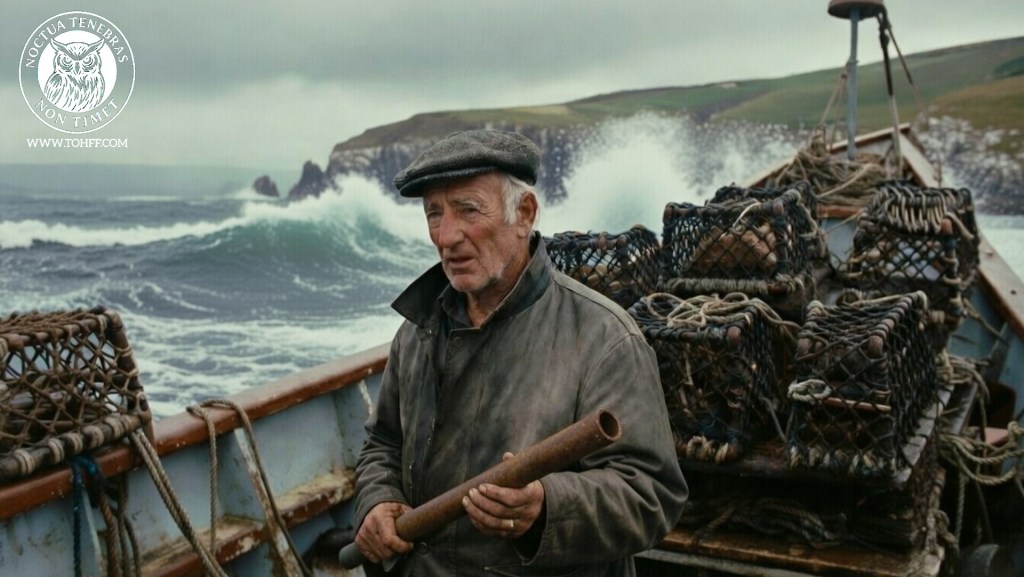
Live as if you will die tomorrow, fish as if you will live forever….
I grew up in a place called Falmouth in Cornwall in the UK, and back in those days commercial fishing was a mainstay for the local economy. As a kid I spent too much time fishing with a rod and reel from the quays in the harbor, or off the rocks somewhere along the coast as it was a virtually free form of entertainment and could always lead to other adventures…
As I grew up, I started to work on small fishing boats, not only to pass time but also to hopefully make a few pennies. When I left school, I moved away from Falmouth as soon as I could at the age of 16 and was working on a lobster and long-lining boat out of Ilfracombe in North Devon. From there I moved back to Falmouth and for a few months, before I joined the British Army, I worked on a boat mackereling.
When on leave from the Army, I went out a few times gill netting at night in the River Fal, which was always my favored way of fishing. But, after that I lost touch with the fishing business as those I knew grew too old, sold their boats and also, my focus was on other things.
Looking back, I was lucky as I got to interact with what could be classed as the old and traditional Cornish fishermen who worked the sea by hand, understood the weather and could find good fishing grounds by reference points, when the coast could be seen. Technology and hydraulics certainly made things easier, well as easy as things can be on a commercial fishing boat.
I started this article with the saying “Live as if you will die tomorrow, fish as if you will live forever…” which is something I use to hear regularly and is a saying that can be applied to business and life in general. Even though my fishing days were 40 years ago, there are many lessons I learned that have stuck with me throughout the years. Many of those in the fishing industry can be classed as misfits, many live fast, and spend their money as fast as they make it. But to be able to make that money, and succeed in bringing in the big catches, you need to think and plan for the long term…
The lessons and perspectives I gained, that stuck with me, have helped me develop my business even though I walked away from the sea. The fishing industry is a hard business to be in, it’s a physical business, but for a boat to make money the skipper needs to be very wise and the crew must work hard as a team, the same as any business.
- It’s a way of life, not a job: To be successful at something you have to live it. If you want a 9-to-5 job with tea breaks and paid vacations, then you will always be a slave. When seriously fishing, your life is dictated by the seasons, tides and weather. When there is an opportunity to fish, you head to sea. To run a business, you must take the opportunities to make money when they arise, wherever and whenever. There is no off time…
- Planning: Everything is planned, everything is recorded, when and where you had the good catches and when and where you caught nothing. You will have good days and bad days. Learn from the bad days and constantly evolve your practices.
- Maintenance: At every opportunity the boat and fishing gear is cleaned and maintained. If things don’t work, you don’t earn. If things don’t work, as they should, not only can people get hurt, but more importantly, you waste time, which means you lose money.
- Risk: If you are not willing to take risks, then your boat will never leave the harbor. To catch a fish, you must find the fish. Taking calculated physical and financial risks on the weather conditions, fishing grounds, and gear to be used is what the fishing industry is all about. In life, if you are not willing to take risks, and make changes, then you will always be a slave.
- Adversity: You will have good days, and you will have bad days. You will be uncomfortable, cold, wet and tired. You will get hurt at some point, as will everyone else. There will be times when the fish and money are scarce. There will be occasions, due to no fault of your own, that things go wrong, boats break down, fishing gear is lost… Crying about such things will not fix them. Work, planning, hustling and understanding that things are going to go wrong at some point can keep you afloat in situations where others sink.
- Patience: One you have put out your gear, be it nets, pots or long-lines you need to wait for them to catch. You can be hauling in other strings of gear, cleaning them and getting ready to reset, but the gear takes time to catch. Business is the same. You send out proposals, talk to people, schedule events etc. And it takes time for the clients to bite, and to get hooked. Even though you might not see anything happening, your proposals and business cards are fishing for clients.
- Deception: Never tell your competitorswhere you’re going to be fishing,never tell them your good fishing grounds, because they will move in on them. It’s better to be thought of as a bad fisherman with a boat full of fish, than be thought of as a good fisherman with an empty boat. Your competitors are not your friends, they will steal what you have and sabotage you, given the slightest chance. Nobody needs to know your business apart from you!
- Money: Save your money and invest in your business. You will have bad times, so have the money to cover your living expenses. Work hard and play harder when you are young, and have nothing to lose, but the sooner you start building the foundations for your future in terms of gaining the relevant experience and training, then the sooner you’ll become a skipper.
- I am not a slave: I got the job on the lobster and long-lining boat in Ilfracombe as part of a government youth employment scheme. For me it was a ticket out of Falmouth and the door to various fishing industry related qualifications. I left the scheme as the money was horrendously low and I was joining the British Army. So, I moved back to Falmouth for a few months and found work on a boat mackereling before leaving for basic training. It was a small boat, just me and the owner, and he promised if I worked out, he would pay me on a share (%) of the catch. That was the usual way fishing boats divide their profits. Things worked out and we worked hard and the money I was on for a 16/17 year old was very good. For some reason I received several letters that I had to go and see those running the youth employment scheme, it seemed they didn’t like the fact I had walked away from the “Job Placement” in Ilfracombe, even though I had made it clear I was not working 7 days a week for pennies. Due to my parents nagging I went to see the schemes coordinators. I remember now, even though I told these people I was signed up for the Army and didn’t want anything to do with them, they were insisting I go on another youth employment scheme. Falmouth is a small town, and I think I went to school with a kid of one of the women in the office. I am sure they knew I had avoided going to school as much as possible, left school as soon as possible and now had walked off a youth employment scheme. So, for them I was a problem child… They wanted me to go on a scheme to be trained as a furniture removal man… When I told the skipper of the boat I was working on about my meeting, he laughed and told me to tell them to “Fuck Off”. He also made the point that I was making more money at my young age than they were, sitting in their miserable little office, working a government job and passing judgments on kid’s futures. But they were slaves, and I was not… Fishermen tended not to have much time for government type people anyway…
So, I moved on and joined the British Army and was there for 5-years until I bought my way out. In many ways the military was an anticlimax, I went from dealing with misfits and entrepreneurs in the fishing industry to dealing with box tickers and creeps in the military. Overall, the military is an easier and safer environment to be in, when compared with being in the fishing industry, unless of course you’re on the front lines of a war.
In that year before I joined the army, one kid that was on one of my courses, never made it to the second course, he was on a beam trawler that went down in the English Channel with all the crew lost or found dead. Apparently from those that knew the boat it was not well maintained and the skipper spent most of the profits on drugs and booze. Another man who at one point I was looking to work for, disappeared somewhere around the Lizard while lobster potting alone, his boat was found drifting, and his body was never found. I am sure there are others who I came across who ended up in watery graves, but that goes with the business.
I don’t think many, if any of those I served with in the military would last long working in the fishing industry. Too much hard and constant work to start with… It’s a performance-based industry, kissing ass and looking pretty won’t get you anywhere. But, likewise many of those I bumped into while fishing would not have made good soldiers, pirates yes, regular soldiers, definitely not.
Like many things in life, when you are doing them, working hard, struggling, dealing with one problem after another, dealing with difficult people, it sucks. But, when I look back now to over 40 years ago, I learned some very valuable lessons and had experiences that for better or worse were priceless. Many of those experiences and interactions would be impossible to have these days just due to the passing of time and people.
So, live as if you will die tomorrow, fish as if you will live forever…
Books on Amazon!
Social Navigation: A Practical Survival Guide For Human Interactions
In this book I’m sharing some of my experiences, in addition to giving you hard love advice on how to deal with those who you encounter.
Audio Book @ https://www.amazon.com/dp/B0FDL1CBL3
Kindle @ https://www.amazon.com/dp/B0C4FTBS42
Paper Back @ https://www.amazon.com/dp/B0C47JD1BZ
Hard Cover @ https://www.amazon.com/dp/B0FKGQVNH7
 Truth Only Has Few Friends