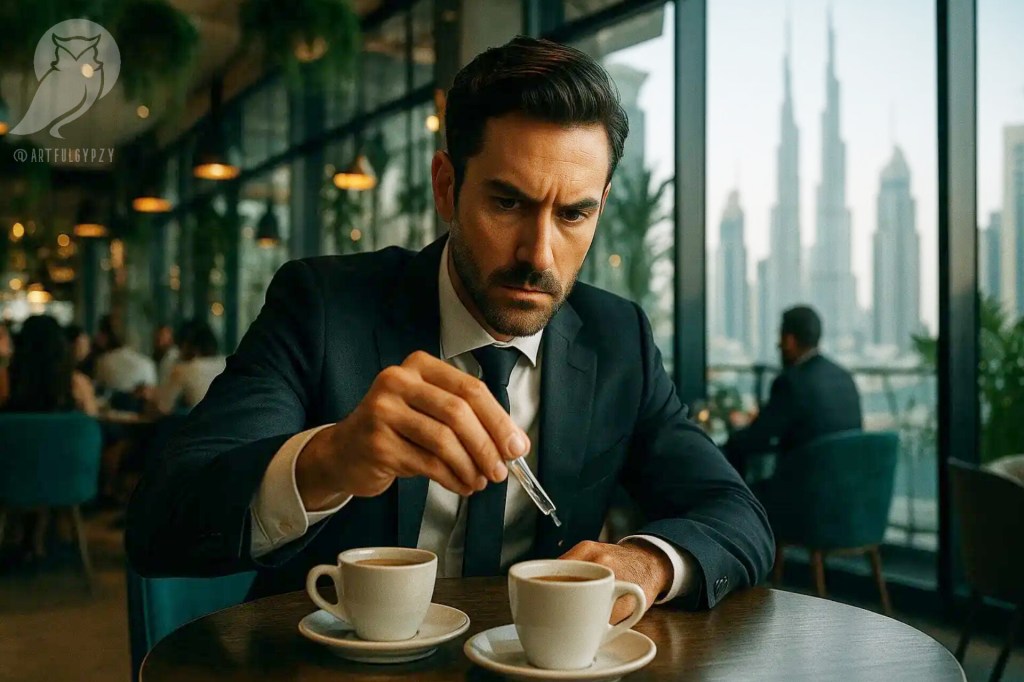
The vast majority of those in the close protection and bodyguard industry are trained to anticipate violence in its most obvious forms: gunfire, knives, ambushes, and physical assault. Yet one of the most insidious threats they must also prepare for is poisoning—a method of attack that is silent, often invisible, and devastatingly effective.
Unlike conventional attacks, poisoning bypasses security perimeters and physical vigilance, striking at a principal’s most basic vulnerability: what they eat, drink, or touch. The 2004 poisoning of Ukrainian presidential candidate Viktor Yushchenko serves as a sobering example of how this threat can materialize, and why bodyguards must understand its dynamics.
The Case of Viktor Yushchenko
In September 2004, during Ukraine’s hotly contested presidential race, Viktor Yushchenko suddenly fell gravely ill after a dinner meeting with senior officials. His face became disfigured, his health deteriorated rapidly, and he was rushed abroad for treatment.
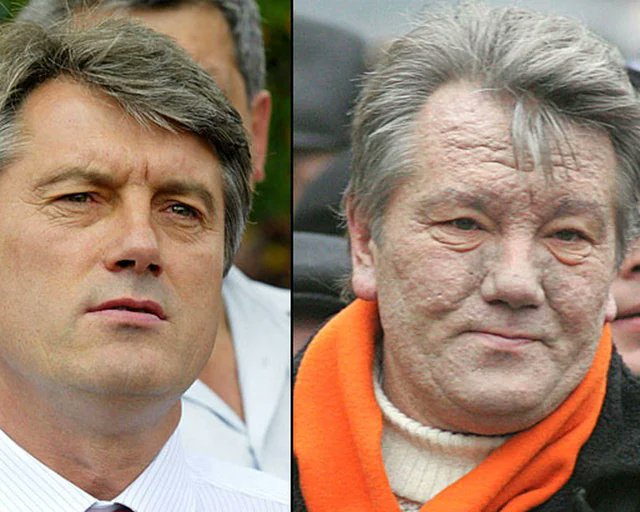
Doctors later confirmed that he had been poisoned with dioxin, one of the most toxic chemicals known, at concentrations thousands of times above normal human exposure levels. Though he survived, the poisoning left permanent scars and dramatically shaped the political landscape of Ukraine.
The dioxin poison was almost certainly administered to Viktor Yushchenko orally, meaning he ingested it. The prevailing theory, which Yushchenko himself has stated, is that the dioxin was mixed with his food during a dinner on September 5, 2004, at the dacha (country home) of Volodymyr Satsiuk, the deputy head of Ukraine’s Security Service. The dinner was also attended by the head of the Security Service, Ihor Smeshko.
Medical professionals noted that because dioxin is soluble, it would be easy to administer in something like a cream soup or another dish. Tests confirmed that the pure TCDD dioxin was a single chemical, not a mix, and was administered in a single, extremely high dose.
For security professionals, the Yushchenko case illustrates several realities. First, it highlights how poisoning can be weaponized in political or high-stakes environments where direct violence might trigger international backlash. Second, it underscores how difficult it can be to immediately detect poisoning. Yushchenko’s symptoms initially mimicked those of common illnesses, delaying recognition of foul play and complicating medical intervention.
In February 2023 its reported Ukrainian GUR or SBU attempted to assassinate Apti Alaudinov, commander of Akhmat special forces (Chechen) by delivering a letter with a poisonous substance on it, most likely through a courier. Alaudinov, as well as other personnel who came into contact with the envelope, received timely medical treated from toxicologists in a specialist Moscow hospital and survived. In this case the symptoms were recognized quickly and specialist medical treatment was available.
Poison is a common weapon in Easter European, Middle Eastern and Asian intelligence circles. A notable assassination was that of Ibn al-Khattab, a Chechen Mujahideen, who was killed in 2002 by a poisoned letter delivered by a Dagestani messenger hired by the Russian FSB.
Poisoning as a Modern Security Challenge
The use of poison in targeted attacks is a recurring and highly publicized tactic in the context of the conflict and political climate surrounding Russia and Ukraine. While there are many long-standing cases, the war that began in 2022 has also seen new and highly controversial incidents.
- Ukrainian plot to kill 77 Russian pilots with poisoned cake and whiskey – October 2023: A plot allegedly concocted by Ukrainian intelligence operatives to wiped out dozens of Russian pilots with poisoned cake and whiskey at a graduation banquet was foiled at the last minute, according to a report. In the middle of the festivities, a deliveryman showed up carrying an enormous cake weighing more than 44 pounds and several cases of Jameson Irish Whiskey, all courtesy of the flight school’s unknown “grateful admirers,” the reports stated. An official at the academy in charge of security pulled a screenshot of the deliveryman from the CCTV video, who was subsequently identified as 32-year-old Egor Semenov, a native of the occupied Ukrainian city of Melitopol. He was quickly detained as he attempted to fly to Moscow and admitted to poisoning the cake and whiskey.
- Roman Abramovich and Ukrainian Negotiators – March 2022: Reports, including from the investigative group Bellingcat, indicated that Abramovich and at least two senior Ukrainian peace negotiators experienced symptoms consistent with poisoning (red eyes, painful tearing, and peeling skin) after a meeting in Kyiv. Their lives were not in danger, and the substance was never definitively identified.
- Russian Military Personnel – July 2022: Suspected Poison (Botulinum Toxin). Russia’s Ministry of Defence accused Ukraine of poisoning its soldiers in the Zaporizhzhia region. Ukraine’s interior ministry advisor suggested the soldiers may have eaten expired canned meat, denying the poisoning allegation.
- Alexander Litvinenko – 2006: Polonium-210 (radioactive). Poisoned in London via tea laced with the radioactive substance. A UK inquiry concluded that the assassination was carried out by Russian agents and was probably approved by President Putin. The pattern of using rare, hard-to-trace, or military-grade chemical or radiological agents in targeted attacks is seen by many Western governments and independent investigators as a signature method of Russian state security services
The pattern of using rare, hard-to-trace, or military-grade chemical or radiological agents in targeted attacks is seen by many Western governments and independent investigators as a signature method of Russian state security services.
Poisoning as a Modern Security Challenge
For those providing close protection services, the risk of poisoning is multifaceted. Threats can come from contaminated food or drink, toxins applied to personal items, or even chemical exposure in the environment. Unlike a gunman in the street, a poisoner does not need to be in close proximity at the moment of attack—poison can be administered hours or days beforehand, through compromised supply chains, catering services, or even trusted insiders.
The subtleness of this attack vector makes it particularly dangerous. Standard protective measures such as perimeter security or counter-surveillance may not suffice. Instead, bodyguards must think like risk managers, scrutinizing every stage of their principal’s routine where vulnerabilities may exist. A high-value individual’s food, medicine, and environment must be treated as carefully as their travel routes or physical protection.
Lessons for Close Protection Teams
For example several practical lessons emerge from cases like Yushchenko’s:
- Control of Food and Drink: Meals should be sourced from trusted, vetted providers. Where possible, food and beverages should be sealed and prepared under supervision. Sampling by security staff before consumption may be warranted in high-risk contexts.
- Medical Preparedness: Immediate access to medical expertise is critical. Close protection personnel should be trained to recognize symptoms consistent with poisoning—sudden nausea, skin discoloration, neurological effects—and ensure rapid transport to capable facilities.
- Background Vetting: Staff, caterers, and even colleagues with access to a principal must undergo thorough screening. Insider threats remain one of the greatest risks for poisoning.
- Awareness of Non-Traditional Toxins: Modern toxins may be chemical, biological, or radiological in nature. The case of Alexander Litvinenko in 2006, poisoned with polonium-210 in London, demonstrates how advanced and unconventional such attacks can be.
Conclusion
The Yushchenko poisoning alone, underscores that the role of a bodyguard extends far beyond shielding against bullets or breaking out of ambushes. Protection in today’s world requires vigilance against hidden, unconventional threats that target the body’s most basic functions. By treating poisoning as a real and present danger, and by implementing proactive countermeasures, close protection professionals can better safeguard their principals against an adversary that strikes not with noise and violence, but with silence and stealth.
Books on Amazon
Close Protection: Luxury & Hostile Environments
This book is relevant to those in the close protection business as well as private investigators, journalists and those working in hostile environments.
Audio Book @ https://www.amazon.com/dp/B0FHWYT3TF
Kindle @ https://www.amazon.com/dp/B07CNSKXJF
Paper Back @ https://www.amazon.com/dp/1980900388
Hard Cover @ https://www.amazon.com/dp/B0FK26C35M
 Truth Only Has Few Friends