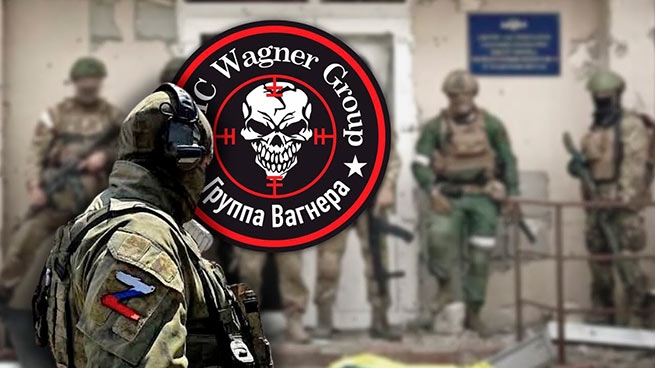
Did the Russian private military company Wagner Group, change the way wars will be fought in the future by going back in time to use successful military principles that were employed throughout history, but have been sidelined in recent times? I will say Wagner and it’s now deceased boss Yevgeny Prigozhin, have laid on the table the cold hard facts of what warfare is all about, that many, especially in the west are too delusional or terrified to acknowledge. Yes, Wagner and Prigozhin have changed the ways how wars will be fought in the future and those in denial will be the losers.
Mercenaries have been employed throughout history and it was only in recent times that the practice was frowned upon by the international community. In most modern-day wars those fighting have been fighting for their own countries interests, whether defending their homelands or conquering others on behalf of their governments.
The term “Mercenary” has become a dirty word as the principle of men fighting purely for money, plunder and adventure has been deemed immoral by the same governments and international organizations who see nothing wrong with bombing and starving civilians if it’s in their own interests. And of course, the media they control always paints the picture that their wars and crimes are essential for their country’s safety and interests, even if the wars they are fighting are thousands of miles away from their homelands.
If we are honest, there are only two reasons wars are fought, to defend a homeland or to conquer and profit. But, in modern times to sell wars to their population’s governments have played strongly on their citizens emotional weaknesses and patriotism.
Do Soldiers or Fighters Win Wars?
Most modern-day armies are made up of volunteers from their own countries, in most places foreigners cannot enlist in other countries armies and in some countries its illegal for their citizens to serve in foreign militaries. There are various reasons for this that stem back to governments fearing and needing to control their citizens.
At a basic level many governments in the past did not want their able-bodied men fighting in foreign wars for foreign governments as it would deplete their stock of able-bodied men if they needed to go to war themselves. Also, the fear of units of trained and organized mercenary troops returning to their homelands was a security risk, especially when these mercenaries’ money ran out. There was also the risk of these mercenaries being bought and influenced by foreign governments to overthrow their own governments. So, laws were brought in to control the use of mercenaries.
It is also far cheaper to get slaves or patriotic citizens to fight in national armies than it is to hire Mercenaries. Also, those conventional soldiers are far easier to control. Napoleon Bonaparte said “A soldier will fight long and hard for a colored bit of ribbon”, this is what modern armies have relied on, but times are changing.
Most modern-day armies are struggling to recruit volunteers, the youth these days have better things to do, and also politically correct and woke agendas are dissuading many from their traditional recruiting demographics from joining. One military unit that is not having a problem finding recruits is the French Foreign Legion, and why is this? Well, I would say because they offer what many young men desire which is adventure, the opportunity to prove themselves and to be part of a tough and disciplined military organization. The French Foreign Legion does not promote wokeness as it knows it will deter future recruits and cause internal issues. This is a big contrast from the Biden Administrations US military, who’s Navy was using drag queens to attract recruits.
Wagner also made it clear that those joining the organization would be subject to very strict discipline and weakness would not be tolerated. They are many reports of recruits being executed for cowardice and traitors being tracked down, snatched and executed, usually with a sledgehammer to the skull. Their boss Prigozhin understood his troops and also that discipline in a mercenary organization is essential.

There have also been reports of major issues with rebelliousness from the Latin American mercenaries that were recruited by Eric Prince for the United Arab Emirates. And back in the 1960’s Mike Hoare admitted to shooting the big toes off one of his recruits in the Congo for the crime of raping a woman. All armies in past times had corporal and capital punishment for soldiers that breached discipline, but back then their recruiting base was far different from what it is today.
It’s a fact that those with criminal tendencies make the best soldiers, well fighters, if they can be controlled. To control such people takes harder men than they and harsh discipline. Many armies used to recruit convicts, or give those who were convicted of crimes the option of joining the military. I know when I was in the British Army (1-WFR 1988/1993) there were guys there who only joined because it was a way for them not to be sent to jail, and the army welcomed them.
There was a media stink because Prigozhin recruited from Russian prisons, but as I said, it’s proven criminals make the best fighters. You can be assured that those who have been imprisoned in Russian prisons are used to living in harsh, disciplined and violent environments to start with. Those with criminal tendencies are also natural risk takers, survivors, used to using their initiative, and respond well in a “Eat When You Kill” environment… These are the attributes of fighters, which these days many conventional armies reject. But why? Because such people are very difficult to motivate and control if there is no one to fight or no rewards to be gained, and by rewards I am not talking about plaques, certificates or bits of colored ribbon that appease slaves.
Prigozhin himself reportedly spent 9-years in Russian prisons, and after his release he went on to become a very successful businessman, a multimillionaire. Prigozhin understood his soldiers and was respected because he was one of them, a criminal, a risk taker, an entrepreneur, who went on to become the most successful warlord in modern history. Prigozhin could have just stayed a successful businessman, no need for wars, no need to be dealing with convicts, risking his life etc. but obviously the pure love of risk and adventure was in his blood.
The Leadership of Mercenaries
I was talking with a friend recently, a very distinguished, experienced and knowledgeable military scholar about the issues of senior Russian Generals leading from the front and being in the thick of the combat. I mentioned Prigozhin was numerously on the front lines and my friend rightly pointed out that Prigozhin was not a General. Very true, and maybe this is why Wagner was so influential. If Prigozhin was from a regular military background he would have had the attributes of taking the initiative, taking extreme risks, and making controversial decisions drilled out of him a long time ago. These are the core attributes that a private military company require in their leadership, but such attributes are not what’s desired in a conventional military.
In modern times we can class successful leaders of private military companies and mercenary organizations as such people as Mike Hoare, Bob Denard, and Rolf Steiner back in the 1960’s and in the past few decades there has been Eeban Barlow. I am not classifying the glorified security companies that operated in Iraq and Afghanistan as mercenary organizations because they were nothing more than glorified armed security guard companies, working for government clients on purely defensive duties. Those I mentioned here have fought wars on behalf of others, that differentiates them from the armed security guard companies of Iraq and Afghanistan fame.
We can say without any doubt that Eeban Barlow and Executive Outcomes set the standard for the modern private military company. I have read quite a bit of Barlow’s writings and it is clear that he is an expert in his field with a vast amount of experience to back up what he is talking about. I am sure Executive Outcomes would have gone on to do greater things if they were not sabotaged by foreign governments, international organizations and politicians who were jealous of their success and feared the influence they were gaining. Mercenaries are feared because historically they are difficult to control, and their ideologies can be very fluid.
A few that have walked in Eeban Barlow’s shadow have ended up becoming unstuck and being involved in what can only be described as mercenary fiascos. Maybe they lacked the foresight, and wisdom that comes only from experience, even though they had spent time in conventional militaries. What many former military personnel forget is that in the real world you’re on your own, no one is going to come and bail you out, however much ass you kiss, or how loud you cry… Hard currency might work, but why drop dollars on those who have already proved to be f#ck ups…
What is clear is that the private military world is a world for entrepreneurs who have the wisdom to navigate its politically unstable waters as well as dealing with the complexities of the logistics, recruitment and finally the act of fighting a war. Very much a world for warlords, for those with gangster attributes, and not a world for the pampered, privileged and entitled…
The Casualties
Many people question Wagner’s success rate and its high casualty rate, especially in the battle of Bakhmut in Ukraine. Wagner’s troops were openly active in Libya, Syria, Mali, Central African Republic, Mozambique, Ukraine and reportedly in Venezuela, and have experienced disasters in several of those locations. In Syria in 2018 in the area of Khasham 100 to 200 Wagner fighters were killed in one day, and from Mozambique, videos emerged of where Wagner fighters were literally chopped up after being ambushed by Islamic Extremists.
But Wagner stayed in business and went from strength to strength, the high casualty rate is part of mercenary warfare. The reason for the French Foreign Legion being formed was it was more convenient for French governments if foreigners were killed fighting its wars than Frenchman, less bad press coverage.
Wagner had no shortage of recruits, and those joining its ranks knew the risks and the rewards. They joined Wagner to fight, not for a career and a pension. They were contract soldiers recruited on a need to fight basis, not just to fill spaces in a peacetime army. This is how things have been done throughout history, large standing armies are quite a modern approach to a nation’s defense, and also, a very expensive one for many nations.
Some could argue the quality of training of mercenaries contracted as required will not be to the same standards of that of career soldiers. Well look at Bakhmut, how many Ukrainian special forces, elite units and military experienced foreign volunteers were destroyed? These days troops with technical skills are required but on the front lines you need fighters, you need killers, which is what Wagner had plenty of. Wagner also gained a vast amount of experience which went on to be employed in the training of its recruits on relevant combat skills and not parade ground theatrics or the use of pronouns.
Many of those that criticize the failures of Wagner forget that it was a relatively new organization that was still evolving when it was shut down. They also forget that only recently NATO with all the centuries of experience and expertise that it’s contributing armies have, had to run away from Afghanistan… literally run away… Obviously its time for some people to rethink their strategies, training, and protocols.
So, could the business model of Wagner Group PMC be one that changes warfare as we know it? I would say for those that are willing to learn, have studied the history of warfare and understand what motivates men to fight then Wagner’s business model is the way forward. Private military companies have proven themselves to be far more flexible and efficient than conventional militaries, just study Executive Outcomes if Wagner leaves a bad taste in your mouth. The trouble is conventional standing armies employ a lot of people and make a lot of money for government connected companies, so streamlining them to work in conjunction with PMC’s would hurt the pockets of a lot of well-connected people.
Also, in today’s woke world, especially in the West, governments are doing their best to demasculate those that would be the prime recruits for any private military companies and even for their own standing armies. As always, the answer to the military needs of most countries is pretty obvious but many can’t see them because their vision is blurred with short sighted wokeness, greed, and a complete fear and misunderstanding of pure warfare and those who are required to fight it.
Books on Amazon!
Counter Insurgency Operations For Government Agencies
A Tactical Guide For Low Intensity Warfare
With the opening of many countries borders, the de-funding of police and the indifference of criminal and court systems to imprisoning career criminals and gang members, there is the huge potential for the destabilization of states and cities by organized crime and terrorist groups.
Kindle @ https://www.amazon.com/dp/B0D61H5RLK
Paper Back @ https://www.amazon.com/dp/B0D63XZS1V
Hard Cover @ https://www.amazon.com/dp/B0FLWHL9R6
 Truth Only Has Few Friends
One response to “Wagner Group – A Business Model For The Future of Warfare”
Very informative and knowledgeable writing. Makes one look extremely closely at what present military in the West is turning out…. Creature comforts, complacency, cyber warfare.
Insular bubble about to break