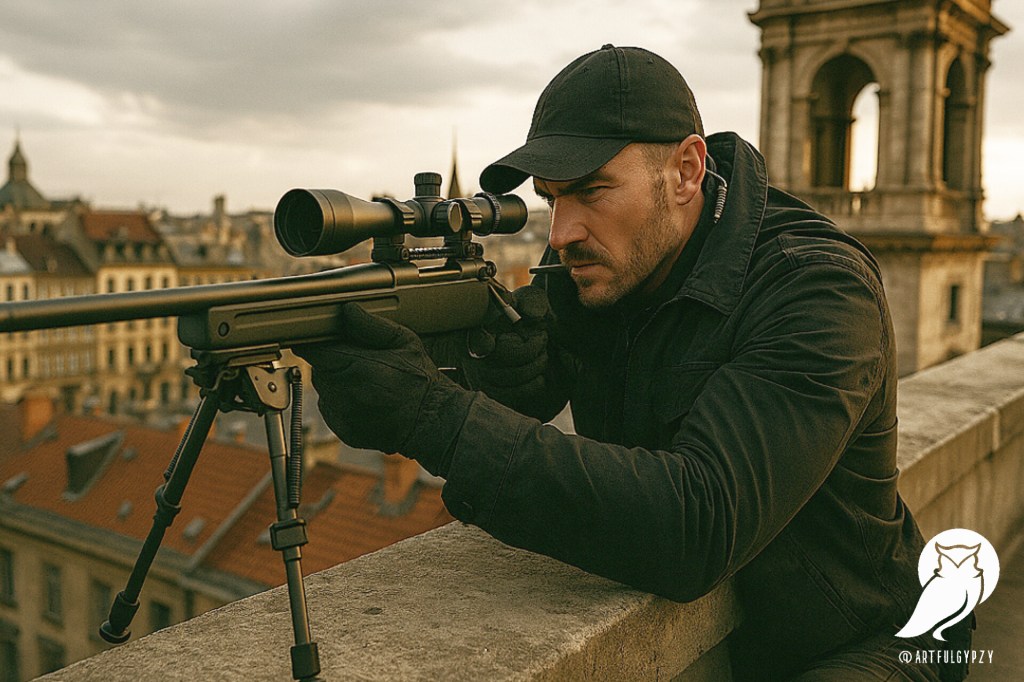
I am sure there are those who initially looked at the title of this article and dismissed it as something that will never apply to them and that it is just fear mongering. Personally, I think the information here is applicable to everyone who is working in hostile environments or with high-risk clients. Examples of high-profile sniper shoots include:
- Zoran Đinđić, the sixth Prime Minister of the Republic of Serbia, was assassinated on March 12, 2003, in Belgrade, Serbia. Đinđić was shot from approximately 180 meters away, by a 7.62mm Heckler & Koch G3 rifle as he exited his vehicle outside the Serbian government headquarters. He was shot in the heart and died almost instantly, his bodyguard was also seriously wounded in the stomach by another shot.
- Kurdish crime boss Aslan Usoyan was killed in a sniper attack in central Moscow on January 16th, 2013. The assassin used a silenced ‘Val’ 9mm assault rifle. One of Usoyan’s bodyguards reportedly returned fire with several blind shots, but the fact that it took some time for the police to find the shooter’s position, showed that the bodyguard had failed completely at locating the sniper. Usoyan was shot in the head, a woman walking near the mob boss stepped into the assassin’s firing line. According to LifeNews daily’s timeline, the hitman attempted to move her by shooting her in the thigh. When she remained upright, she was shot again in the chest and fell, allowing the sniper to hit Usoyan once more as his bodyguards grouped around their wounded boss.
- Montenegrin gangster Dalibor Djuric was shot in the chest by a sniper on 22nd September 2016 while outdoors in the yard of the Spuz state prison in the Montenegrin capital Podgorica. The jailed Mafia boss of one of the rival drugs clans from the resort of Kotor, was shot dead in prison while serving a two-year sentence for extortion. Police blocked the streets surrounding the Spuz prison to try to locate the assassin, but only found a car set on fire near the prison.
- Nicola Rizzuto was killed on November 10, 2010, he was the leader of the Sicilian faction of the Rizzuto crime family in Montreal, Quebec, Canada. Rizzuto was killed at his home when a single bullet from a sniper’s rifle, that went through two layers of glass in the rear patio doors of his house before hitting him. The gunman had been hiding in the woods outside the mafia boss’s Montreal house.
Three of the above assassinations were of Mafia bosses, and I am sure there are plenty of you wondering why I would use these as examples for legitimate close protection personnel. Well, 1. To show that the criminals have trained shooters and weapons available. 2. A lot of businesses overlap into the criminal world ranging from high-end jewelers to real estate agents. This is where you need to always do in-depth due-diligence on your clients, they may appear to be squeaky clean but, what’s the real reason they need your services? So, understanding a little about snipers and counter sniper operations is an essential part of your operational planning and preparations.
Snipers
One thing I find amusing and annoying, is that whenever there is a terrorist attack with the attacker using a long gun, the media tends to immediately label the shooter as a sniper. There is a very big difference between a trained sniper and some idiot with a rifle! Also, just because someone served in the military to some extent, it does not make them a sniper. But, with modern weapons and a little knowledge, the wannabe jihadist or anarchist are still a serious threat.
Whether your potential threat is from specially trained personnel outfitted with state of the art equipment, or an individual with average marksmanship skills, armed with an off the shelf rifle, with tactics acquired from YouTube, you need to have plans in place to minimalize the threat, and procedures in place for dealing with active shooter situations.
There are five general types of shooters: the military sniper, the trained infantryman, the trained marksman, the trained shooter and the untrained armed civilian. Tactically each group have their own application and operational styles, you need to understand a little how they operate to identify the threat you could be under and plan effective countermeasures.
- Military Snipers: At the top of the sniper field are those who have been selected for and passed military sniper schools that usually last anywhere from two to three months. Note, I said selected for… Candidates for most military sniper schools are usually selected to attend the courses after going through basic training and proving themselves capable soldiers within their units, to start with. In addition to long range shooting skills military trained snipers need to be experts in navigation, communications, camouflage, concealment and observation. These individuals are trained to select key individuals as their targets, stalk them and kill them at distance while avoiding detection.
- The Trained Infantryman: Infantry soldiers from professional armies should have no problems shooting and hitting a man-sized target at 300 meters (yards) with their service weapons in most weather conditions from a prone position. In addition to their shooting skills they are trained in camouflage, concealment, stalking and combat tactics.
- The Trained Marksman: Most law enforcement units and the like tend to have marksmen as part of their tactical units that should be trained in precision shooting past 300 meters. The law enforcement sniper schools last from 5 to 10 days and are commercially available to those who qualify. These schools put an emphasis on precision shooting at 100 to 300 meters, and do not put an emphasis on camouflage, concealment, stalking and combat tactics which are not needed by law enforcement units.
- The Trained Shooter: Most military personnel are trained to safely use, shoot, and qualify with a rifle on a regular basis, so they are trained to some extent, but the standards can vary to extremes. There are also the trained competition and recreational shooters who practice regularly and undertake professional marksmanship training but lack the tactical training. Hunters also fall into this category and tend to have at least a basic knowledge of camouflage and concealment.
- The Armed Civilian: These are shooters with little or no formal military or firearms training. You can see them all the time in the news reports from various international war-zones. They have been given a rifle and ammunition and told which direction to shoot and that’s about it. Their shooting is not accurate, they seldom deliberately target specific individuals, but they have high potential to cause casualties far out of proportion to their actual skill level at close and medium ranges.
Hopefully you can see from the descriptions above there is a lot more to being a sniper than just being able to hit a target at 100 meters, and having your picture taken wearing a Walmart ghillie suit. What makes snipers extremely dangerous is their ability to be undetectable before and after killing their target. If you don’t know where the threat is, how can you counter it?
The art of field-craft is the bread and butter of the sniper’s business. They can move undetected and have the discipline to stay virtually motionless and alert for hours, if not days at a time, to get a shot, this is what sets the professional sniper apart from the trained marksman.
The Tools of the Trade
The typical range for a military sniper attack is 300 to 600 meters with medium-caliber rifles. But depending on the environment, the weapons available, and the skill of the sniper, undetected shots from 50 to 2500 meters plus are all possible.
Some of the main calibers for sniper rifles are:
- . 22: Even though this is a very small caliber .22 rifles make excellent close range sniper rifles, as they are small and easy to suppress. Within 100 meters with quality ammunition, they should be able to deliver lethal head shots.
- .308/7.62x51mm: This round has been around since the 1950’s and for many years was the standard round for NATO sniper rifles. This round, with the right weapon and shooter, can hit individuals at 800 meters and deliver harassing fire at 1000 meters plus.
- 7.62X54mm: The Russian military first introduced the 7.62X54mm round in 1891 and it is still in use today with the Dragunov sniper rifle and the PKM machine gun. When fired from quality sniper rifles the round is accurate out to 800 meters plus, I say quality because there are many inferior copies of the Dragunov on the market.
- .38 Lapua: The .338 Lapua has gained popularity as a sniper rifle cartridge and has been used extensively in the wars in Iraq and Afghanistan. In November 2009, in Helmand Province, Afghanistan, a British Army sniper, Corporal Craig Harrison, killed two Taliban machine gunners at a range of 2,475 meters using a L115A3 Long Range Rifle. This is the current record for the longest recorded sniper kill. The .338 round fired from military sniper rifles should be consistently accurate at ranges of 1500 meters but as you can see from Corporal Harrison shooting, it can reach out farther in skilled hands and in the right conditions.
- 9X39mm: This is a Russian round that is used in the suppressed VSK-94 & VSS Vintorez rifles which have an effective range of 400 meters and has been in use by Russians and others since 1987. The 9X39 is a heavy, subsonic round that has excellent penetration qualities against body armor.
- 14.5mm: The 14.5×114mm was developed in Russia during the cold war for heavy machine guns and anti-material rifles and is still used by many countries. There are numerous rifles chambered in this round with the average effective range of about 2000 meters against vehicles etc.
- .50 Browning: The .50 Browning round was first developed as a heavy machine gun round in 1918 and today it’s still in service internationally. In the Vietnam war USMC sniper Carlos Hathcock used a scoped M2 Browning machine gun to get a confirmed kill at 2250 meters. In the 1980’s Barrett developed the M82 sniper rifle that has been used extensively in conflicts since then. These days they are quite a few manufacturers producing .50 sniper rifles for military, police, and commercial use. Sadly, many of these weapons have found their way into the hands of international terrorists. The average effective range of a quality .50 sniper rifle is about 1800 meters.
- 20mm: There are several rifles on the market chambered in 20mm, the American made Anzio has a reported maximum effective range of 5000 meters. There are several bullpup 20mm rifles such as the South African Denel NTW-20 and the Croatian RT-20 which would be a more maneuverable option for sniper operations but at approximately 19 kg (42 lbs) without ammunition they are not really stalking weapons.
These weapons are meant for targeting vehicles, equipment and buildings. Vehicle mounted or in fixed positions, these rifles could be used with devastating effect, as their ability to shoot through most common building materials would render ineffective most cover from fire positions.
There is a lot more to distance shooting that just having a scoped rifle and ammunition, you must ensure the rifle shoots straight to start with. I was chatting with a friend who had spent time in Syria with the Kurdish YPG and he mentioned how a lot of the sniper rifles the Kurds had were not accurate, which is common in such settings. I expect a lot of the weapons were old and had been banged around which is detrimental to a scoped rifle.
Scoped rifles need to be zeroed regularly to ensure the rounds are going where you want them. If the optics are damaged or not properly fitted this can also lead to inaccuracy. The rifle’s barrel needs to be in good condition and taken care of; Romanian rifles used to have very low-quality steel in their barrels, which lead to accuracy issues after minimal use.
Ammunition needs to be of good quality, in many conflicts ammunition will come from various sources including the black market. Different ammunition will perform differently from the same rifle and old or damaged ammunition just might not be able to fly straight at all.
The weapon’s sights are extremely important, and the weapon needs to be zeroed to the shooter. If the shooters eyes are good with quality open sights, they should be able to hit a man-sized target at ranges of 200 to 300 meters. For precision and long-distance shooting optics are a necessity and on the commercial market there are a vast array of scopes to fit all budgets. The quality of night sights have drastically improved over the last 20 years and they have become freely available on the commercial market. Simple and low-cost optics will not enhance the performance of the average $500.00 rifle into the accuracy class of a true precision sniper weapon, but these sights make the trained marksman a much more effective shooter at combat ranges out to 300 meters and beyond.
Many military sniper rifles are equipped with effective suppressors to either completely silence or greatly reduce the noise and muzzle blast of the weapon. Weapons such as the Russian VSK-94 & VSS Vintorez rifles have integrated suppressors on their barrels. Not only do suppressors reduce the noise of a weapon being fired, they also inhibit the task of trying to determine the location of a sniper. Suppressors can reduce the maximum effective range of a sniper rifle, but can be very effective when employed at less than 300 meters. Suppressors are available on the civilian market and are easy to manufacture, the legalities of ownership vary from location to location.
Countering Snipers
The first step in countering snipers is for everyone to be aware of the threat. This is where a threat assessment needs to be compiled and the realistic threats need to be identified, if potential snipers are a threat, then procedures need to be put in place. In general, operational planning for a sniper threat should always be considered to some extent. Not only should counter sniper procedures be planned for but they need to be practiced, your people need to be trained at least in the basic reactions to fire and the use of cover, preferably before they are exposed to the sniper threat.
When compiling your threat assessment check media reports and talk with locals and those with knowledge of your area of operations. You need to determine what the threat level could be; are there trained personnel, what weapons are available and what’s their motivation and objectives.
When planning counter sniper operations, you need to answer four basic questions that will help you to assemble effective procedures that are relevant to your situation.
- What is your task and objective?
- What equipment and weapons do you have?
- What does your opposition want to accomplish and what capabilities do they have?
- What are the rules of engagement?
Rules of engagement are a very important consideration and can vary greatly, for example if you are caught up in an active sniper situation in an urban area in the US and you have a legal weapon on you, you cannot go blindly firing into potential sniper locations without positively identifying your target. Also, this puts you at risk of being mistaken for the active shooter and shot by police or other armed citizens. In a hostile or combat environment, your rules of engagement could be a lot freer but the limits of appropriate use of force need to be understood by everyone.
In many parts of the world people openly carry firearms and just because someone has a firearm it does not make them a threat. Also, just because someone is shooting, it does not mean they are shooting at you or being hostile. There is a big difference between someone in your vicinity shooting in the air and you being shot at with accurate and effective fire. You need to be able to determine the difference and plan your reactions accordingly.
Counter sniper procedures are mainly common sense and should be ingrained in most former military personnel with any hostile environment experience. Basically, if you can’t be seen, you can’t be shot, so limit your exposure, always make maximum use of cover, and move tactically. Remember, the sniper always has the initiative unless detected and is trained to wait for hours for a target or the time when your guard is down.
- Avoid open plazas and intersection
- Use concealed routes
- Stay away from, and don’t linger in doorways and windows
- Move along the side of streets, not down the center
- Stay in the shadows.
- When moving with others stay spread out and use bounding over watch
- Go around well-lit areas at night
- Never be silhouetted against lights, skyline or light backgrounds
- Move quickly and quietly across open areas that cannot be avoided
- Make maximum use of cover and concealment
- Do not gather with others in large groups in the open
- Conduct all meetings, and gatherings of personnel undercover
- Do not wear anything that could draw attention to you
- Do not establish routines
After your threat assessment has been compiled you need to survey the area around your location for potential firing positions that a threat sniper could use, with routes in and out of those locations. Once identified, those locations need to be monitored and where possible, occupied with friendly forces, booby trapped or made unusable for a threat sniper. Clear any bushes or obstructions etc. that could be used as cover by snipers or inhibit your view of potential sniper positions.
Now in many urban and rural locations the potential positions for threat snipers will be endless, so your only option will be to limit exposure; if you can’t be seen you can’t be shot! Board up windows or put up screens to block the lines of sight for threat snipers. Canvas or plastic sheets can be used to make a dangerous alleyway or street crossing safer. In the long term, fixed positions, more solid barriers and defenses can be put in place such as sandbags, or earth filled 55-gallon drums etc.
Here are some basic military considerations for counter sniper procedures that can be adapted to the civilian world. As always, not everything will apply to everyone and all situations.
- Cameras: These days’ surveillance cameras are widely available and can be used to monitor potential sniper positions. Hunters trail cameras can be placed in potential sniper positions and along the routes to those positions to help identify any potentially hostile activity in your area. Also, after a shooting incident they will help identify the shooter. In hostile environments, special care needs to be taken when checking or retrieving cameras as they could have been booby trapped, or the sniper could be waiting for you. Placing semi-camouflaged cameras around a property will let any potential threats know the area is monitored and can be a deterrent.
- Drones: Where weather conditions and budget allow, drones fitted with surveillance or preferably thermal imaging cameras are ideal for spotting potential threats especially in rural areas.
- Observation: Potential sniper firing positions should be constantly under surveillance and where manpower allows observers should be employed to monitor these positions for suspicious activity.
- Patrols: Random patrols should be employed to gather intelligence, identify hostile movements in your area and deny snipers access to firing positions.
- Dogs: Trained dogs can quickly search large areas and buildings for snipers who are trying to remain undetected.
- Protective Clothing: Ballistic vests and helmets will not always stop a sniper bullet, especially from large caliber weapons, but can significantly reduce the severity of wounds.
- Armored Vehicles: Whenever possible try to use armored vehicles.
Considerations for a Contact
Where the rules of engagement allow, suppressing fire can be directed at the general area of the sniper’s location to force them into or keep them behind cover, so you can move to a safer cover position, or extract from the sniper’s kill zone. Look for and shoot at objects close to the sniper’s position that would cause ricochets and flying debris, such as brick, plastered or concrete walls. Also, you need to be aware of injuries from ricochets and debris when being shot at! In hostile environments and combat zones maximum use should be made of what light, medium and heavy weapons are available.
Make maximum use of smoke dischargers where available and use the smoke to cover your movement. Commercial smoke signals are available from maritime stores as they are used for emergency signals on boats, also various smoke bombs are used for paintball and airsoft games. In a major city the chances are you cannot carry firearms, but you can legally carry a couple of smoke bombs. If an active shooter situation develops drop smoke and bugout!
It is very important that you understand the difference between cover from view and cover from fire; you always want to locate the latter where possible. You need to consider which type of rounds will be stopped by the cover you’re using. A table might be able to stop a .32 fired from a handgun, but a .50 round from a M82 will go through it and you.
Hunting the hunters
When a sniper threat has been identified and you have the trained personnel, weapons and are within your rules of engagement, you should take active measures to eliminate or capture the sniper. Potential indicators that threat snipers are in your area could be:
- Personnel seen wearing camouflage uniforms
- Individuals in possession of binoculars, range-finders, and well-maintained scoped rifles
- Hearing single-shots being fire.
- A lack of locals in an area before a shooting incident
- Reflections spotted from optical lenses
- Small groups of (one to three) local personnel wandering around or observing your location for no apparent reason.
To capture or eliminate a threat sniper you need to identify a pattern in their modus operandi such as:
- Time of day of sightings or shooting
- Direction of incoming sniper fire
- Location of threat sniper sightings
- Patrols would need to look for material evidence of threat snipers being in a location such as broken foliage, hide positions, cigarette butts, food, body waste, empty round casings or discarded equipment.
Once a pattern in the sniper’s routine has been identified, be it the location of a potential firing position, a route in or out of that position, then a covert ambush would need to be set, and the sniper killed or captured. Note: Kill or capture operations need to be kept on a need-to-know basis, regular routines need to be maintained as not to alert the threat sniper or surveillance that they are being targeted.
Conclusion
Hopefully this article has given you an insight into counter-sniper operations and will enable you to draw up some plans and procedures to fit your needs and circumstances. Sadly, we all need to keep the threat from active sniper shooting in mind and be prepared to deal with worse case scenarios.
Books on Amazon
Close Protection: Luxury & Hostile Environments
This book is relevant to those in the close protection business as well as private investigators, journalists and those working in hostile environments.
Audio Book @ https://www.amazon.com/dp/B0FHWYT3TF
Kindle @ https://www.amazon.com/dp/B07CNSKXJF
Paper Back @ https://www.amazon.com/dp/1980900388
Hard Cover @ https://www.amazon.com/dp/B0FK26C35M
 Truth Only Has Few Friends