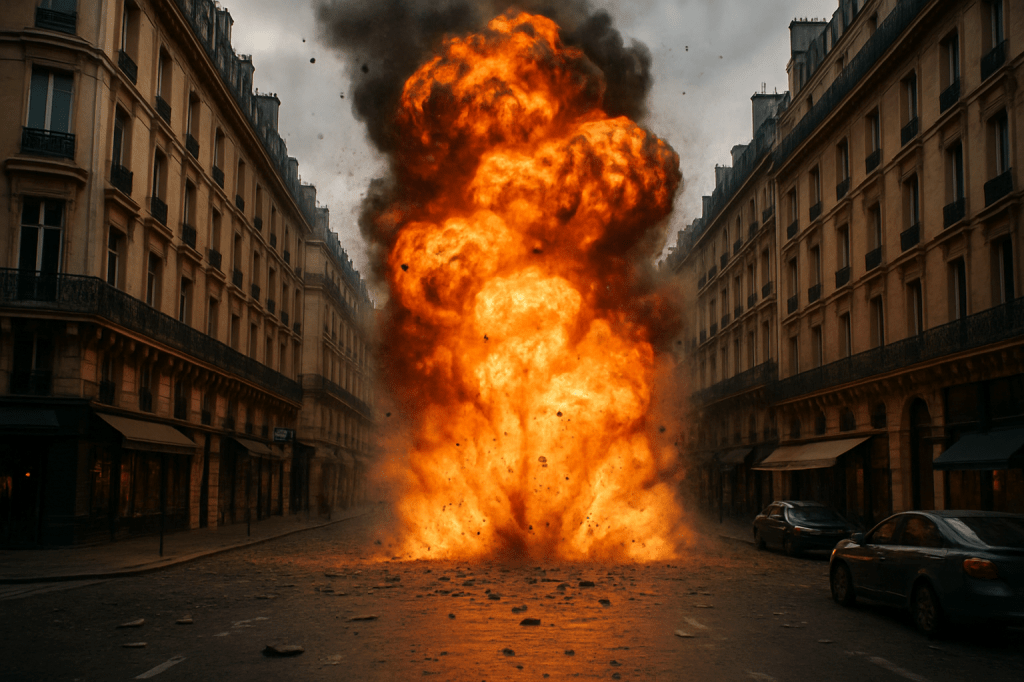
My personal experience dealing with terrorist Bomb/Improvised Explosive Devices (IEDs) incidents started in 1989 while serving in the British Army with 4 Platoon, B-Coy, 1-WFR for 22 months in Northern Ireland; since then bomb/IED awareness has always been a part of my security procedures and planning. I have to say that it astounds me these days after numerous, well publicized IED attacks globally that many security and law enforcement professionals are severely lacking in realistic IED awareness.
If you are working in the center of a large city, like London, Paris or New York, or are working in the emerging markets, where bomb scares are not unusual, it is likely that you may get caught up in a suspicious package or actual IED incident. Whether your venue, office or residence is targeted directly or it just happens to be on the same street as an IED, you will need to know how to react and should have procedures in place.
Bombs and Improvised Explosive Devices are a threat to everyone and are used frequently and with great affect by criminals, cranks and terrorists the world over. If you follow international events, then you will see that there is a lethal bombing somewhere in the world almost every day. The basic IED can be made from commercially available materials that are sold over the counter in most places. Information on how to construct IEDs is available from military or survival bookstores, the Internet, former military, or demolitions trained personnel. The size of an IED can range from as small as a cigarette packet to as big as a large container truck.
IEDs can be disguised as virtually anything; this gives the bomber the advantage of being able to kill their targets without alerting them to the threat, and giving the bomber a large degree of anonymity. IEDs can be used to kill selected targets or to kill indiscriminately. These facts are why the IED is often the favored weapon of criminal, cranks and terrorists the world over and is the most dangerous threat to security, law enforcement, military and the public.
In this article, I have listed some basic information on IED’s and some basic guidelines for dealing with an IED incident. I also dissect the law enforcement response to the NYC times square car bomb incident in 2010. And after reading this article you should be a lot more knowledgeable and competent than those members of the NYPD who were in charge of the response to that incident, well more of a circus than a response!
EXPLOSIVES
There are many types of explosives available on the market, all of which have differing characteristics, chemical compositions and properties. What they all have in common is that they can be extremely dangerous. I am not going to go into the details of explosive composition because you don’t need to know it; it makes no difference if a device has Composition B or gasoline in it, it’s an explosive device and can kill you.
There are two categories of explosives: high and low.
- High explosives such as Dynamite, Gelatin, TNT, RDX, PETN, C-4, and Semtex undergo a rapid chemical change upon detonation. This change is a transformation from a solid or liquid to a gaseous state. The change, which takes approximately one billionth of a second results in the gas rapidly moving away from the point of detonation at speeds of up to 26,500 fps in the case of C-4. The moving gas is the force that cuts steel, concrete and anything else in its path.
- Low explosives burn quickly instead of exploding. The best examples of low explosives are gunpowder and match heads. The burn rates of low explosives are usually under 3000 fps. Low explosives are usually more sensitive to heat, shock and friction than high explosives, which tend to be pretty stable.
Commercial and military grade explosives are available on the black market either bought from corrupt soldiers/police or stolen. Also, you need to remember commercial explosives are used in construction, quarrying and by famers and is available for sale form explosive distributors.
BOMB AND IMPROVISED EXPLOSIVE DEVICE IDENTIFICATION
Bombs and IED’s can be disguised as virtually anything, so you need to identify weather you, your clients or location could be targeted for an IED attack. You need to compile a threat assessment and identify all the threats you could be targeted by, if IED’s are in the threat assessment then you need to start making procedures for dealing with an incident. You must remember when compiling the threat assessment to also think what other potential IED targets could be in your area, which if targeted could cause issues for you. I remember one client telling me that during the 90’s in Colombia he booked into what he thought was a nice secure hotel only to look out of the window of his room to see it was next to a small military base, which at the time would be an ideal target for Narco Guerillas.
At a personal level, you need to be aware and suspicions of any objects, cars, or activity in or around your locations that could be a cover for an IED. An unattended and out of place bag, an unknown car that has been parked next to your building or on an approach road too long, unknown people acting nervously etc. You must be aware and suspicious, but you must understand the realistic threats or, you will be seeing IED’s and terrorists everywhere. Common sense is something which is lacking in people today in general but, as a security or law enforcement professional you need to be able to keep things real and not get caught up in what can be classed in many cases as group hysteria. So, at a basic level everyone needs to know what to do if they are caught up in a IED incident, how to deal with a suspicious object or in the worst-case scenario the aftermath of a IED attack!
Detecting IED’s can be extremely difficult; there are many bits of equipment on the market that can sniff explosives, ex-ray bags and vehicles etc. These are all good if you have them, they are well serviced and maintained. As far as I know most of the “bomb sniffers” have to be regularly calibrated and have their filters changed… I remember visiting quite a few high-profile locations in Abuja, Nigeria where the gate guards were using such devices to check cars, and I doubt if the devices had been maintained since being taken out the box, and I would also be surprised if they were even charged up. I paid numerous visits to a very high profile hotel in Abuja and even though you had walk through a metal detector it was clear if you looked at the power cable it was unplugged…
The best example of fake bomb detectors was the British Made ADE-651 that claimed to be able to detect explosives, guns, drugs, ivory and even truffles and was powered by the users’ static electricity. You may laugh, but the Iraqi Government apparently bought £52 million UK pounds’ worth of them. Its claimed that up to 20 different governments bought the fake device at £60,000.00 a piece… They were made by the British company ATSC, which was dissolved in 2013 and the company owner Jim McCormick was sentenced to 10 years in prison on fraud charges. So, if you use bomb detectors make sure they are real, are maintained and the people using them know what they are doing.
In my opinion the best thing for detecting IEDs and explosives are properly trained and handled sniffer dogs. Again, at a base level, the dog needs to be properly trained, looked after, and handled… I know of one company in UK that use to ask their guards to bring their pet German Sheppard’s etc. on residential security details so the clients could see they had, what they believed to be dog handlers and trained dogs. I have seen Civil Defense sniffer dogs in Nigeria that were so afraid of the cars that they were checking they had to be literally dragged to them. Always verify you’re getting what you are paying for, of all industries the security and defense industry should be one of the most credible but, in many cases it’s a scammers paradise.
The issue with using dogs and the man portable bomb detectors is you must get close to the potential device and within the blast range. This is a big issue if you are dealing with devices that could have been put in place just to draw security forces into and ambush or suicide bombers.
THE SECONDARY DEVICE
Remember: The Secondary Attack, The Secondary Attack, The Secondary Attack!!!! If one incident has just occurred then what’s next; another IED, follow up ambush, ambush on those responding or ambush on evacuation routes?
An IED can be used on its own or in conjunction with other IEDs or weapons. Good bombers will always place a second device near the first device, in a likely incident control point for security forces or on an evacuation route from the blast area of the first device. The second device is to catch the personnel or emergency services coming to the aid of anyone hurt in the first blast, security forces dealing with the incident or personnel escaping from the first blast. Sometimes the first device is designed to go off for no other reason than to draw emergency or security services into a trap or drive people into the larger main device.
This happened in Northern Ireland with the Omagh bombing in 1998. Irish terrorists called in the location of a car bomb to the local police with the wrong address, this resulted in civilians being evacuated into the blast area of the device; 510 lb’s of AMFO… 29 People were killed and over 220 injured… I have a good friend who’s family lives in Homs, Syria where there have been too many car and suicide bombings to count. After one suicide bombing incident, the locals rushed to help the victims, and one man came out of the blast area bleeding and screaming for help. When people started to pick him up to carry to an ambulance, he blew himself up killing several of the civilians who went to help him. He was a secondary suicide bomber.
I remember talking with a client/friend who had a relative working at a hospital in Orlando Florida on the night of the Pulse nightclub shooting on June 12th, 2016. After such incidents, the security for the casualty receiving hospitals etc. needs to be upped as they are a prime secondary terrorist target as are the responding ambulance crews.
When republican Irish terrorists bombed Thiepval Barracks, Northern Ireland in 1996 they placed a secondary car bomb outside of the barracks medical center to try to maximize British Military casualties. Think about it, where will everybody be heading after a terrorist attack and if the terrorists murder the doctors and nurses who will treat the casualties? Terrorists do not operate by the same human rights they expect to be protected by!
You must always expect if an explosive device has been found, or gone off that there could be a second or third device somewhere.
NORTHERN IRELAND
Here are a few examples of how IEDs were employed by Irish terrorists; these are taken from when I was a teenager serving in the British Army in Northern Ireland in 1989 to 1991. There were many more incidents but at the time dealing with such things was the bread and butter work for the infantry battalions stationed in Northern Ireland.
- 9th of January 1990: Olven Kilpatrick was murdered by terrorists in the shoe shop that he ran in the town of Castlederg, he was shot at close quarters. The terrorists left behind an explosive device in a shoe box set to detonate 30 minutes after the shooting, by which time security forces and emergency services were in the immediate area. Mr. Kilpatrick was an off-duty member of the Ulster Defense Regiment. Think about how many shoe boxes there are in a shoe shop! The device detonated and several Royal Ulster Constabulary (RUC) officers were injured, there were no further fatalities due to the fact that secondary devices were expected to be left at crime scenes and the area was evacuated.
- 15th January 1990: A car bomb is detonated in the Village of Sion Mills and caused major damage to the RUC station that was unmanned at the time. The security forces had limited routes they could use to get to the village. A QRF team form Strabane, lead by at the time Cpl Lewis Weaver responded to the incident and on the way out spotted a suspicious white van along their route, it was noted and they moved on at full speed. The same van was passed on the QRF’s return route and the info was reported. On further inspection, the white van contained 1000 lbs of AMFO. It was reported several years later that one of the terrorists involved in the operation “Bernard Declan Casey” was working for British Special Branch and had ensured the command wire was not connected to the device in the white van. It was expected for an IED to be placed along one of the routes into the village to catch the security forces entering or leaving the area. If time was available the routes would have needed to be searched and cleared. If time and helicopters were not available to deploy the responding troops, then the responding patrol had to drive in at top speed, if there were no foot patrols in the area who could get to the incident locations by moving across country.
- 1990: A car is parked a short distance from the “Hump” security force base in Strabane with what appears to be mortar tubes inside. A security force cordon is placed around the car to secure the area and when the security force teams are conducting their clearance searches around their cordon points, a team finds an IED attached to a trip wire. Further searches of the cordon positions turn up other IED’s. The mortar tube in the car turned out to be a piece of drainpipe, it was a hoax that was used to draw security forces into the IED’s that the terrorists placed in likely security force cordon positions.
- 4th May 1989: Corporal Stephen Mcgonigle, a very respected member of 1 WFR, was killed near Silverbridge, South Armagh. A car was parked on the side of a country road in an area regularly patrolled by security forces. When the foot patrol spots the car, they checked with their control room to see if the car is registered as stolen. It was not. The patrol saw nothing overtly suspicious with the car, so moves forward to check it. At least one of the team was carrying electronic counter-measure equipment that can identify and block radio signal form remote-controlled bombs. The bomb was not remote controlled it was detonated with a command wire. The three other members of Cpl Mcgonigle’s team were all injured in the blast.
You should take nothing at face value and always remember the secondary device. Always be suspicious of anything that looks out of place, if you are in an area where there is an active IED threat you need to draw up pans and procedure of how you will respond if you are caught up in an incident.
TYPES OF DEVICE
Letter & parcel bomb
Up until the late 1990’s the letter and parcel bomb was the most widely used of all IEDs. The bombers who use this type of device range from stalkers through to hard-core terrorists. The letter bomb gives the bomber a direct line of access to the target and affords the bomber virtual anonymity for themselves, as the device can be sent from anywhere in the world. As the name suggests, the device is placed into an envelope or parcel and posted to the target. Upon opening the device explodes.
If you or your client is under a threat, all mail should be checked. Any suspect packages should be put through an x-ray machine to confirm or ally your suspicions. If you don’t have an x-ray machine, then the suspect package should be placed in a safe area and specialist assistance sought. The package would have been knocked around whilst in the postal system, so it will be safe to move, just don’t open it.
Incendiary devices
A simple form of this device can be made as small as a cigarette packet and be made from condoms and commercially available chemicals. When properly ignited, they will burn at high temperatures and are primarily designed to destroy property. Incendiaries require an initiator (flame or chemical action), delay mechanism, igniter and main incendiary charge. Incendiary bombs are usually used against shops and businesses for extortion purposes or say a lawyer’s office to destroy case records before a trial etc. They can easily be placed between the cushions of furniture or among flammable objects, in the case of thermite it can be placed on or above machinery or vehicles, all devices can be timed to go off when the business is closed and empty of staff, so causing the maximum fire damage. This can also help to give the bomber anonymity as all the possible DNA evidence etc. could be burned!
If either your client or his business is under the threat of incendiary attack, the following precautions should be taken. A deterrent would be to install overt CCTV and employ high profile 24-hour security guards. The CCTV could, in the event of an incident, be used to identify the bomber but ensure to keep the recorders and data storage in a fireproof container or if using internet cameras back everything up on the cloud. If the client’s workplace is an office suite, then access needs to be restricted as much as possible. Visitors should not be left unsupervised, all non-fire-retardant furniture removed, and all areas search at the end of the business day. Cameras should be placed in high-risk areas such as entrances/exits and outside toilets and all personnel entering the office suite should be searched.
Blast bombs
This device can be made very small. Blast bombs can easily be placed in a take away food container or bag and placed in a trash can or pile of rubbish, this type of device is used to cause disruption and confusion. In the city of London, UK, in the early 90s, a spate of such devices placed in trash cans resulted in all trash cans being removed from the streets and the London Underground. These devices can cause great disruption and kill indiscriminately.
Realistically, there is very little that can be done to stop a bomber planting these devices in city areas. The device can be easily disguised and moved during rush hour. It would be impossible to watch everyone, let alone search them, dogs could be employed buy they will not be able to sniff everyone. Security cameras on buildings and in shops would be useful when trying to identify the bomber after the device has detonated.
Pipe bombs / grenade’s
Pipe bombs are simply metal tubes filled with some type of explosives usually mixed with a type of shrapnel (nuts, bolts, nails etc.) and detonated by various means. If put together properly they can be very portable, concealable, and devastating weapons. Military grade hand grenades are available on the black market and are again very portable, concealable with most having an effective blast radius of 10 to 15 meters. One incident that comes to mind is from when I was in Jos, Nigeria in 2011, where a church was attacked on Xmas Day… A grenade was thrown at a church and the police officer working security was shot and killed… A very simple terrorist attack that took seconds and where the attackers easily escaped.
You always must be aware of your environment and constantly assessing people around you and their body language. In high profile areas where the threat assessment has identified the possibility of this type of IED attack extra security measures need to be put in place such as screens on windows etc. so nothing can be thrown in and to minimalize the effects of a blast.
Undercar booby-traps (UVB)
This device was a favorite weapon of Irish terrorist groups when targeting off duty police and military personnel. The device is placed in a container such as a Tupperware box and attached to the underside of a vehicle using magnets, usually under the driver seat. The usual method for triggering the device is by using a tilt or vibration sensitive switch. The UVB enables the terrorists to attack selective targets. There is a risk of discovery involved when placing this device as access to the targets vehicle is needed. If the bomber manages to plant the device, it will kill and maim the occupants of the car if it is not discovered.
The best defense against the UVB is to deny the bomber access to the vehicle. If you are under an IED threat and the vehicle is secured in a garage, the entrance and driveway to the garage need to be physically checked before the vehicle is moved. There could be a device attached to the door of the garage or a mine in the driveway. If the vehicle has to be left unattended, the surrounding area needs to be searched and then the vehicle. Searching a vehicle for IEDs is a basic and important skill and needs to be practiced regularly.
Car and truck bombs
Car and truck bombs enable the terrorist to conceal and move large devices. The car bomb can be used against individual or indiscriminate area targets. All it takes is for someone to drive the vehicle to the target and leave it to explode. Against an individual this device could be placed along a route or near an entrance to a building that is frequented by the target. The device can be triggered by remote control, command wire or, if the target is setting a pattern, by a timer. A method of delivering a device to a high security area is to use a suicide bomber or to force someone to drive the vehicle with the device in it to the target. The latter was a common tactic of Irish terrorists. It starts with the intended driver being kidnapped or having his home invaded. The driver is then informed that if they don’t drive the device to the target location they and their family would be killed. If they drive the device, at least they hopefully have a chance of survival. The driver is then chained and locked into the vehicle with the device and is told how long they have got to get to the target before the device explodes. The driver has little choice but to drive the device to the target location and hope the security personnel there had at hand some bolt cutters etc. with which to cut them out of the vehicle before the device explodes. Nearly all front gate guard posts and check points in Northern Ireland in the day had bolt cutters available for exactly this situation. On 24th October 1990 our Battalions main base “Lisanelly Barracks” in Omagh was proxy bombed, the driver of the vehicle was cut out by the front gate guards. This 1500 lb AMFO device failed to fully detonate due to a faulty detonator.
As I stated earlier in major cities you can get caught up in IED incidents without directly being a target. You can just be in the wrong place at the wrong time. April 24th, 1994, I had just landed in Johannesburg, South Africa and was at the main bus station waiting for a bus to Durban. While I was talking to a girl I knew there on a payphone, I heard what I thought sounded like a bomb going off, and I was right, it was a bomb that killed 9 people just up the road from the bus station and I am sure injured way more. But the positive thing was, as I remember my bus still left on time.
While I was in Abuja and Jos, Nigeria in late 2011 and early 2012, there were numerous IED attacks on churches. There was one car bomb attack in Abuja that killed 37 people; the car had been parked in the church parking lot for days before the attack, but the area had never been checked or searched. A simple pre-service sweep by a trained search dog would have identified the device and prevented 37 people from being killed.
Improvised mines
These devices can vary in size and be disguised as virtually anything. Their triggering methods are only limited to the imagination and ability of the bomber. In Northern Ireland, large devices were usually placed in rural areas in culverts, under roads, or disguised as milk churns or in bales of hay. In the conflicts in Iraq, Afghanistan and Syria IEDs have even been hidden in animal carcasses.
In urban areas, they can be placed in lampposts, rubbish bins or in vertical drainpipes on the side of a building. To place a bomb into a drainpipe, the terrorist lowers the device into the drainpipe from the top and a command wire detonates the device. The command wire can go over the building or be laid in the guttering connected to a firing point out of the line of sight of the killing zone. Command wires have the advantage over remote controls because there are no radio signals that can be identified or jammed, it’s a direct wire to the device. In all such operations in Northern Ireland, the terrorists use youths as watchers. The child playing at the end of the street and shouting to his friends could actually have been telling a bomber that you were in their kill zone.
Sleeper bombs
An IED can be placed in a position months before it explodes. If it is known that at a certain time in the future you or your client will be attending an event, a function or staying in a hotel at a certain time, precautions need to be taken. In 1984 in Brighton, England, such a device killed five people in an IRA attempt to kill the then British Prime Minister, Margaret Thatcher.
Defense against car bombs & mines
To beat the area car bomber, one must be vigilant and suspicious. If a vehicle looks suspicious, then get it checked out. Security forces have an advantage over private security personnel in being able to check out the background of a vehicle very quickly to see if its stolen or rented. So, if you are suspicious of a vehicle, call the authorities and let them check it out; if you are unwilling or unable to contact the authorities, then just avoid the vehicle.
For private security personnel: when the car bomb or mine threat is directed at your client, then precautions need to be taken. If there are limited routes in and out of the client’s residence or office, then these routes need to be regularly physically checked. Any suspicious cars, recent digging or wires leading away from the road need to be checked out. When the client is traveling to and from work, the routes must be varied as much as possible. All trips should be kept secret until the last minute and then be preceded by an advanced security team, which needs to arrive at the clients destination with enough time to check out the area before the client arrives.
When entering or exiting a building, different entrances/exits need to be used. If possible, use fire escapes and staff entrances. If the client is to stay in a hotel, then their room will need to be searched along with the adjoining rooms if possible, and a check kept on anyone using the rooms. If the rooms are booked a while in advance, a check will need to be done on all building work and maintenance carried out in between the time of booking and the time of stay, as this work may have been used to cover the planting of a sleeper bomb.
Suicide bombers
Suicide bombings are not a new issue, back in World War 2 the Japanese employed suicide attacks against allied forces to great effect in the Pacific campaigns, but in recent years suicide attacks have become the hallmark of Islamic extremist terrorists.
The Israeli security forces have been dealing with the threat of suicide bombings for decades and at a frontline level rely on training their police and military personnel extensively in reading and understanding peoples body language, to try to identify suicide bombers and eliminate them before they can detonate their devices. There is no politically correct way to deal with possible suicide bombers, luckily for the Israeli forces their Government understands their situation and supports their actions. This is a huge contrast to the witch hunts British Armed Forces have been subjected to over the last few years.
In the wars in Iraq, Syria, and Afghanistan the front-line troops had to constantly face the threat of suicide bombing attacks ranging from devices placed in armored vehicles to devices strapped to children. In such battles as the battle for Mosul the Iraqi forces had to deal with an extremely complexed situation as every vehicle and every civilian could have been a potential suicide bomber.
Kurdish forces in Iraq and Syria who were abiding by the rules of engagement advised to them by their Western NATO trainers put themselves at risk constantly by giving surrendering and wounded terrorist the benefit of the doubt rather than a quick double tap. The Kurds are seeking independence and were doing everything possible to fight a fair war against an enemy that deserved no quarter.
From a security professional’s perspective if dealing with the threat of suicide attack’s you must understand you are going to take casualties, but you need to plan to limit the extent of the casualties as much as you can. A good example of this is the attacks on the Coptic Churches in Egypt on Palm Sunday 2017, one surveillance video shows one of the bombers detonating his device at the security checkpoint. The bomber most likely realized he would not get into the Church without the device being discovered, so he decided to do as much damage as he could before arousing the suspicions of the security personnel.
So, at a basic front line level everyone needs to understand what indicators they need to look for in someone’s body language that could identify them as a potential threat. From a planning perspective, procedures need to be put in place to limit the bombers access to target areas and limit the potential blast area at checkpoints etc. in the case of an attack.
Mortars
These days no-one seems to consider the threat from mortar attacks. Mortars can be improvised, and I see no reason why terrorists should not be able to get hold of military mortars and ammunition. Mortars and grenade launchers have been found in the arsenals of Mexican drug cartels and recently in raids on illegal arms dealers in Spain, so they are available on the black market.
Improvised mortars were used widely in Northern Ireland, against Security Force bases and on mainland UK against Heathrow airport and the Prime Minister’s residence in Downing Street, Central London. They were usually launched in quantities of ten, from an improvised base plate mounted on a flat bed or high-sided truck. These improvised mortars usually contained about 45 lbs of improvised explosives with a fuse time of 16 to 20 seconds and a flight time of 10 seconds. Their range was between 80 to 250 meters. The propellant was normally made from Sodium Chlorate soaked “J cloths”. Each mortar weighed about 120 lbs and usually went straight through most anti-mortar screens.
Improvised mortar attacks were common in Northern Ireland, one of our patrol bases at the “Hump” in Strabane was hit in 1990 when D-Coy was on duty, Clady PVCP was hit when A-Coy was on duty, luckily no casualties on both occasions. The Irish terrorists tried the hit the “Hump” again in January 1991 when 6 Plt, B-Coy was on duty, the terrorist tried to put the mortars in a location where a RUC patrol happened to be having a tea break. After a quick exchange of fire where everyone missed, the terrorist escaped, but at least the attack was avoided.
Military mortars come in light, medium and heavy variations. I would say that light and medium mortars would be the most useful to terrorists as they are quite mobile. The maximum range of light mortars, 50mm to 60mm can be anywhere from 700 to 3500 meters when firing high explosive bombs of about 2 to 4lbs with rates of fire from 8 to 20 rounds a minute. The maximum range of medium mortars, 81mm and 82mm is up to 5900 meters with high explosive bombs weighing 6 to 8lbs with a rate of fire of 8 to 20 rounds per minute. The ideal targets for mortars would be busy airports, chemical plants, gas refineries and petroleum storage depots.
The best defense against improvised mortars is to identify and dominate any likely positions that could be used as a base plate location to launch mortar attack, this can be done with CCTV, drones or patrols. If the terrorists have military mortars you are going to have a lot of problems controlling an area of up to nearly 6km around your location. This could be why no-one wants to consider the threat from mortars!
HOW TO DEAL WITH AN IED INCIDENT
SECURITY FORCES SHOULD BE INFORMED AS SOON AS AN IED IS FOUND OR IF YOU HAVE GOOD REASON FOR SUSPECTING AN OBJECT OR VEHICLE OF BEING AN IED. DISPOSAL AND DIFFUSION OF IEDs IS TO BE LEFT TO TRAINED PROFESSIONALS. DO NOT ATTEMPT THIS YOURSELF.
Everyone should know the basics procedures for dealing with an IED incident. If you are working in or have a business in an area where there could possibly be and IED threat, you will need to draw contingency plans for an IED incident. If you are traveling to a city where IED incidents occur, you need to know how things can develop and whether the local security forces know what they are doing or will be putting you and others at risk due to their incompetence.
There are four steps when dealing with an IED:
- Confirmation: Confirm, to the best of your ability, whether the object/vehicle is an IED, taking into account the following considerations: Are you under a threat from IEDs? Are the objects seemingly out of place? Are you in an area where terrorists are operational? Is there a funny smell around the object such as almonds, marzipan or petrol? This is where your threat assessment comes in. An unattended bag in an airport will arouse more suspicion then an unattended bag in a bar or restaurant but both could be just as dangerous or just as harmless. If all unattended bags in bars or other public places were reported as IEDs, there would be hundreds of false alarms every day but one just might be an IED. If you have good reason to suspect an object or vehicle, then check it out. The police and security forces should be willing to help you, if you give them good reasons for your suspicions.
- Cordon: Once a device has been confirmed, the area around it and roads leading to it need to be cordoned off so no-one can gain access to the area. It depends on the size and location of the device, as to how far away the cordon will be put in place, but a basic rule is that you should be out of line of sight of the device. This is because if you can see the device you can be hit by shrapnel or debris if it detonates. Think of the potential IED as a rifle barrel, if you can see it, it is pointed at you, and has a clear shot at you, so it can hit you. In the private security world, cordon preparations and duties would fall on the static or residential security teams etc. If an IED turns up at your residence, the residential security team would have to deal with the initial cordon and clearing of the area. Cordon equipment needs to be on hand, such as cordon tape, flashlights, maps of the area and communications equipment. Plans need to be made for the evacuation procedures and cordon points for the different types of device. All cordon and control point locations need to be physically searched for booby traps before being set up, the basic search would be 10 meters around the position.
- Clearing the area: People should be moved out of the blast area of the device; the blast area depends on the size and location of the device. In some cases, depending on the size of the device, it may be safer to leave people in buildings and under cover, rather than moving them into the open. It would make sense to assign a location in your building that could be used for this purpose, an internal room with no windows would be ideal. When evacuating people, a route should be taken that is out of line of sight of the device; if the device explodes when evacuating personnel, flying and falling glass is a big danger and needs to be considered when planning the evacuation route, as is the threat of secondary devices.
- Controlling the incident: Control of all IED incidents should be handed over to authorities, as soon as possible. You need to brief the responding police or security force personnel as to where the device is, when it arrived, how it arrived, where your cordon positions are, whether there is anyone still within the cordoned area and where they are. You also need to pass on any relevant information of threats that have been made and suspicious incidents or people that have been sighted in the area. Not only is this professional, but it could help apprehend the terrorists.
When a threat assessment reveals a threat from IEDs, a great deal of planning is needed. Whether you are a business owner, lone international traveler or a close protection team member, procedures need to be made for dealing with IEDs. Everyone in law enforcement, homeland security and the private security industry must have a basic knowledge of how IEDs work, the effects of an explosion and how to deal with incidents but, sadly they don’t. These days basic search techniques and IED recognition is a necessity for everyone, as IEDs are the most widely used terrorist weapon and will be for a long time to come.
HOW NOT TO DO THINGS!
TIMES SQUARE CAR BOMB, NEW YORK CITY, MAY 1ST 2010
After reading what has already been written in this article you should be able to pick out quite a few mistakes in the New York Police Department (NYPD) handling of the 2010 car bomb incident in Times Square in the City of New York.
The vehicle that contained the explosives was a dark blue 1993 Nissan Pathfinder sport utility vehicle with dark tinted windows; it had been parked on a busy tourist-crowded street. People in the area noticed smoke drifting from vents near the back seat of the unoccupied vehicle, which was parked with its engine running and its hazard lights on. They also heard what sounded like firecrackers going off inside.
A police officer approached the car and observed the smoke, saw canisters inside, and could smell gunpowder. The vehicle was set ablaze, but the improvised explosive device had not detonated. Upon arrival, the bomb disposal team used a remote-controlled robotic device to break out a window of the vehicle and explore its contents. The device’s ignition source had malfunctioned and failed to detonate the main explosives. Had it detonated NYPD officials said the bomb would have cut the car in half, and “would have caused casualties, a significant fireball and would have sprayed shrapnel, and killed or wounded many people”.
OK, by 2010 the U.S. had been engaged in the war on terror for 9 years, so did the NYPD and other agencies not know how to deal properly with a car bomb incident. It amazed me when I saw the incident on the TV; they showed the bomb squad defusing the device with crowds stood watching. Basic rule, you and your cordon positions must be out of line of site of the device, if you can see the device you can be hit by shrapnel etc. If the device had detonated there would have been many un-necessary casualties because of the stupidly placed cordon positions alone.
The car bomb was described as a crude device, so was this the reason it was not taken seriously? My first thoughts if I came across a crude and amateur explosive device would be, where is the real one, and that the crude device was nothing but bait to draw security forces into a trap. I strongly doubt the area and cordon positions were checked for secondary devices. In the TV coverage you could see that the roads at either end of the road where the device was located were still open and cops were milling around and relaxing. A suicide bomber could have driven right through the cordon and blown up the bomb squad live on TV. You can’t protect others if you can’t even protect yourself! The NYPD’s handling of this incident can be classed as negligent in the extreme and how you should definitely not deal with an IED incident!
If you are in an urban area and there is a car bomb incident you should initially find cover, get into a building and away from windows. If a device goes off the shock wave can break windows for a few blocks around it. You don’t want to be on an open city street will glass falling on you from 50 stories up. When safe to evacuate the area use back alleys and non-obvious routes and do not hang around to watch how things develop. This is because of the threat from secondary devices and because the first device may only be there to draw in crowds of onlookers or channel people into the main device.
Conclusion
So, hopefully from this article you can see that dealing with IEDs is a complex problem where generally the terrorists have the advantage. The responsibility for IED and terrorist attack prevention is everyone’s responsibility, not just that of the front line security forces.
- Urban planners and the like are responsible for including basic security features in their designs be it for shopping malls or airports. Sadly, in places like South Florida security considerations seem to be the last thing on peoples minds; who’s going to attack a beautifully designed airport anyway… Next you will be telling me terrorists will hijack planes and fly them into buildings…!
- Those responsible for security planning need to realistically understand the threats they could be facing and be allowed to put in place workable preventive measures and responses. I understand that a lot of times security management professionals have their recommendations for upgrading security procedures ignored by their senior management etc. But they must persevere, educate others and make maximum use of the resources they have at hand.
- Front line security forces need the proper training, equipment, and workable procedures to do their jobs properly. Untrained and badly managed guards or police are not only putting themselves at risk but also those they are meant to be protecting.
- The general public needs to know the basics on how to identify suspicious activity, how to report suspicious activity and what to do if they are caught up in a terrorist attack. At a family level, there should be plans in place of what to do if there is a terrorist incident at a shopping mall or public gathering etc. Some simple knowledge and 5 minutes discussing plans and preparations can save lives.
Books on Amazon
Counter Terrorism: Terrorist Attack Response
This book highlights terrorist threats & how to respond to bombings, active shooter, knife and vehicle ramming attacks.
Audio Book @ https://www.amazon.com/dp/B0DYFBJTJQ
Kindle @ https://www.amazon.com/dp/B07BT479DZ
Paper Back @ https://www.amazon.com/dp/1980690456
Hard Cover @ https://www.amazon.com/dp/B0FKSRQ73G
 Truth Only Has Few Friends